



By Jules Rhee, MEd | Latest update 3/2/2026
Teaching fractions can be one of those eye-opening moments.
Because once you start… you realize pretty quickly that a lot of students aren’t stuck on the math.
They’re stuck on the idea.
- “How can 1/4 be bigger than 1?”
- “Why does it look like two numbers stacked on top of each other?”
- “Why are we doing this?”
And honestly… looking at written fractions, I get it. To a student, fractions look kind of scary.
The part that surprised me
Here’s what really stopped me in my tracks:
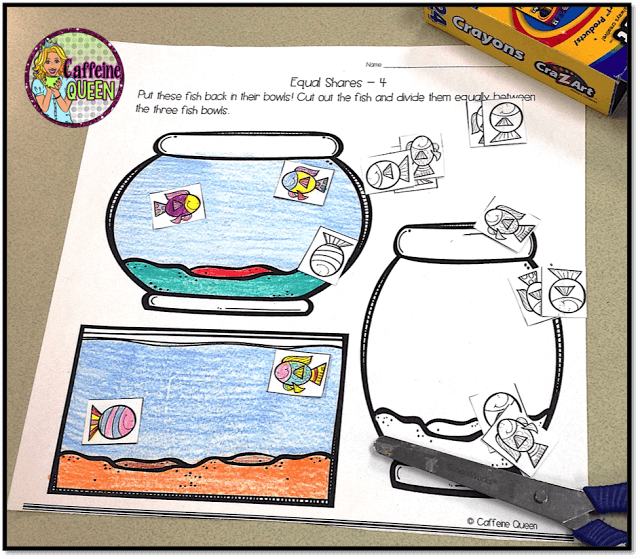
Several of my struggling students couldn’t divide a group of manipulatives or pictures into equal shares… or even find half of a given set of objects.
Whoa, Nelly. Back up the wagons.
Because if students can’t split a group into fair shares, fractions are going to feel like a foreign language.
So I hit pause and went back to the foundation.
Start with what “equal” really means
Before students can confidently find 1/2 of a group (or name 1/3 of a shape), they need to understand words like:
- equal
- fair share
- equivalent
In kid-friendly terms, that means:
⮕ same-sized groups
⮕ same-sized pieces
⮕ everyone gets the same amount
Then you can practice with real-life items (the kind kids actually care about):
- erasers
- jellybeans
- cereal
- crackers
- math counters
- anything you’ve got
Start small with groups of 2, then build to 3, then 4.
Hands-on worksheets that build understanding (without boring kids)
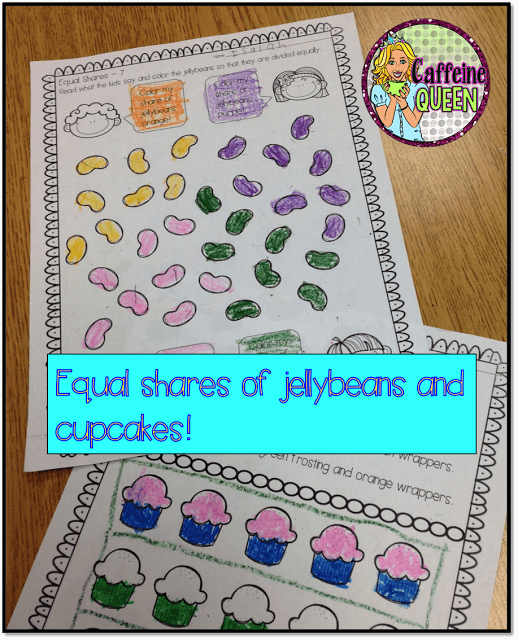
This set includes a variety of hands-on style practice pages that make equal shares feel concrete and visual.
Students do things like:
- split jellybeans and cupcakes into equal groups, then color
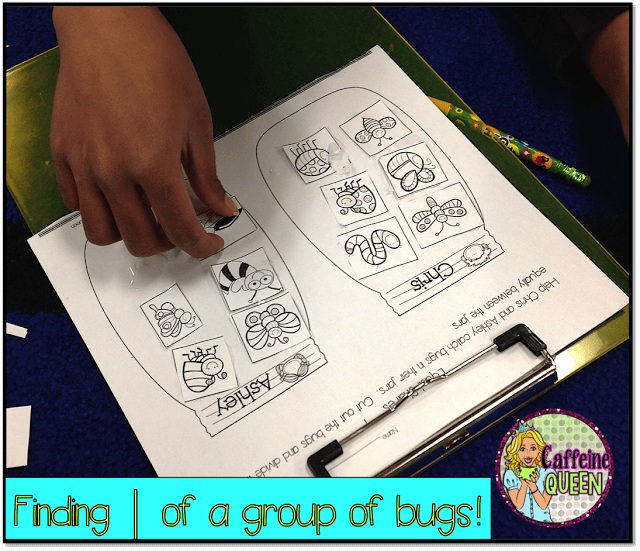
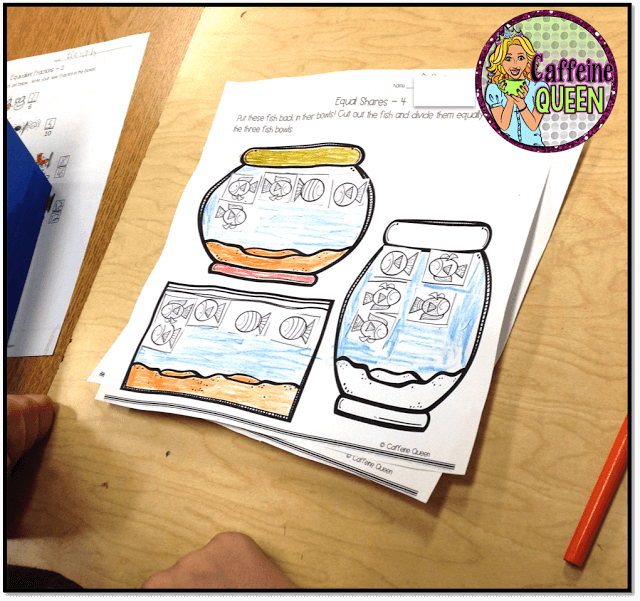
- cut out fish and “beetle bugs,” color them, split them into equal groups, and glue them into fishbowls and jars
These pages are fun and engaging – and they’re especially helpful for students who need:
- movement
- extra processing time
- visual support
- hands-on learning
A lot of strugglers do better when they can touch, move, and see the math instead of just staring at it.
Give them productive struggle time
One teacher tip that matters here:
⮕ Let students struggle a little before you swoop in.
Not “sit there frustrated for 20 minutes” struggle… but productive struggle.
These pages make it easy to provide just the right amount of scaffolding, because you can use:
- only the pages your students actually need
- as much support as needed
- and then fade it out as they gain confidence
And because the activities are engaging, students usually want to keep going. (Rare and beautiful.)
Then move into fractions: 1/2, 1/3, 1/4
Once students understand equal parts and fair shares, fractions make more sense.
From there, students move into fractions like finding:
- 1/2 of a group
- 1/3 of a group
- 1/4 of a group
The set includes fraction posters for 1/2, 1/3, and 1/4 so students have visual reference tools while they work.
Next: equivalent fractions (with models)
After that foundation is in place, the next step is equivalent fractions.
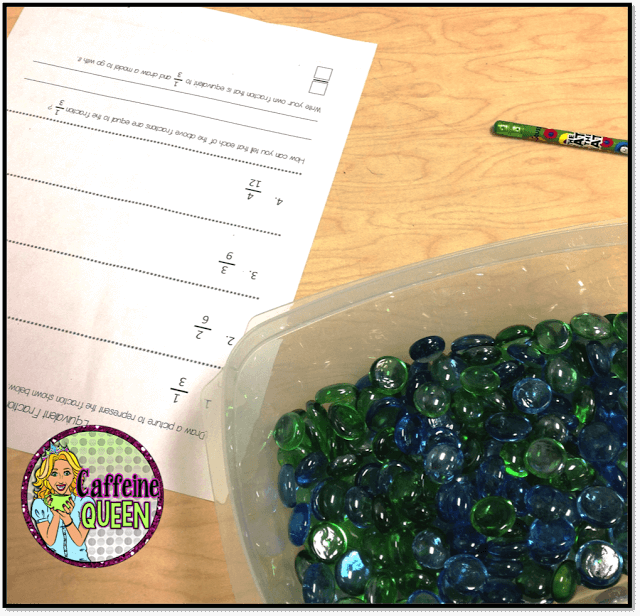
Students evaluate fractions by creating their own model representations, which is powerful because they’re not just memorizing – they’re proving it.
This is also the kind of work that makes excellent:
- bulletin board displays
- conference samples
- parent-teacher meeting “proof” that learning is happening
Parents love seeing concrete work samples, and kids love showing off their thinking.
Fraction rods and fraction circles (yes, the tricky stuff)
Fraction rods are included, along with a page where students divide their own rods and create their own fractions.
And then we move into fraction circles… which can be tough for learners.
These pages walk students through it step-by-step so they don’t feel lost.
Ready for more challenging fraction practice?
If your students are ready to take the next step, you might also like:
About the Author
Written by Jules Rhee, MEd., 30-year teaching veteran. Published 4/6/2015; Updated 3/2/2026.
Jules is the creator of Caffeine Queen Teacher (CQT) – Visual Math Organizers + Graph Paper Support. She’s a veteran teacher with over 30 years of classroom experience (SPED, upper elementary, and middle school) and a Master’s in Education (MEd). Jules shares practical, classroom-tested ideas and creates step-by-step resources that help students stay organized, confident, and successful – especially with multiplication and long division.
Read more about Jules here: About Page | Browse resources here: TpT Store