



By Jules Rhee, MEd | Latest update 4/2/2026
Want to keep your students focused and excited to learn? These easy, effective strategies will help you grab their attention and keep it! Turn your classroom into a place with tons of energy and engagement, no matter the time of year.

You’re in the middle of a lesson, writing on the board, when you hear a sigh.
You glance around. A few students are staring out the window. One is fiddling with her shoe. Three others are digging through their pencil pouches like they’re searching for buried treasure.
You try speaking louder, more animated. You reel a few of them back in.
And then it happens.
“This is boring.”
Out loud. One student just said it out loud.
If you’ve been teaching for more than 15 minutes, you know exactly what that moment feels like… the frustration, the self-doubt, the irritation. You worked hard on this lesson. And still.
Some days, engagement comes easy. Other days, you’re practically doing cartwheels to hold their attention.
Either way, these five strategies made my classroom run smoother, and they’re a lot less exhausting than cartwheels!
1. Shorten Everything
Students can focus for about as many minutes as they are years old. A room full of seven-year-olds gives you about seven minutes before their minds and attention start drifting, and that’s on a good day!
That doesn’t mean your lessons need to be seven minutes long.
It means you need to break them into chunks. A short mini-lesson, then movement or a hands-on activity, then a quick pull-back together, then something to create or solve. Keep things moving, and you’ll keep the energy up.
I used foldables and interactive notebook activities regularly because they gave kids something to do with their hands while we were learning together. A few minutes of cutting and gluing sounds like a chaotic mess, but when it’s quick and focused, it actually keeps kids’ attention better than just sitting and listening ever would.

Turn and Talk was another one I used constantly.
After introducing something new, I’d have students turn to a partner and explain it back in their own words.
Two minutes, no materials needed, and it helps their understanding more than another worksheet. Sometimes kids explain things to each other better than teachers can, plus it helps us know if they truly understand what they’re hearing.

Check out the Animal Report and Informational Writing resource on Teachers Pay Teachers.
Hands-On Learning
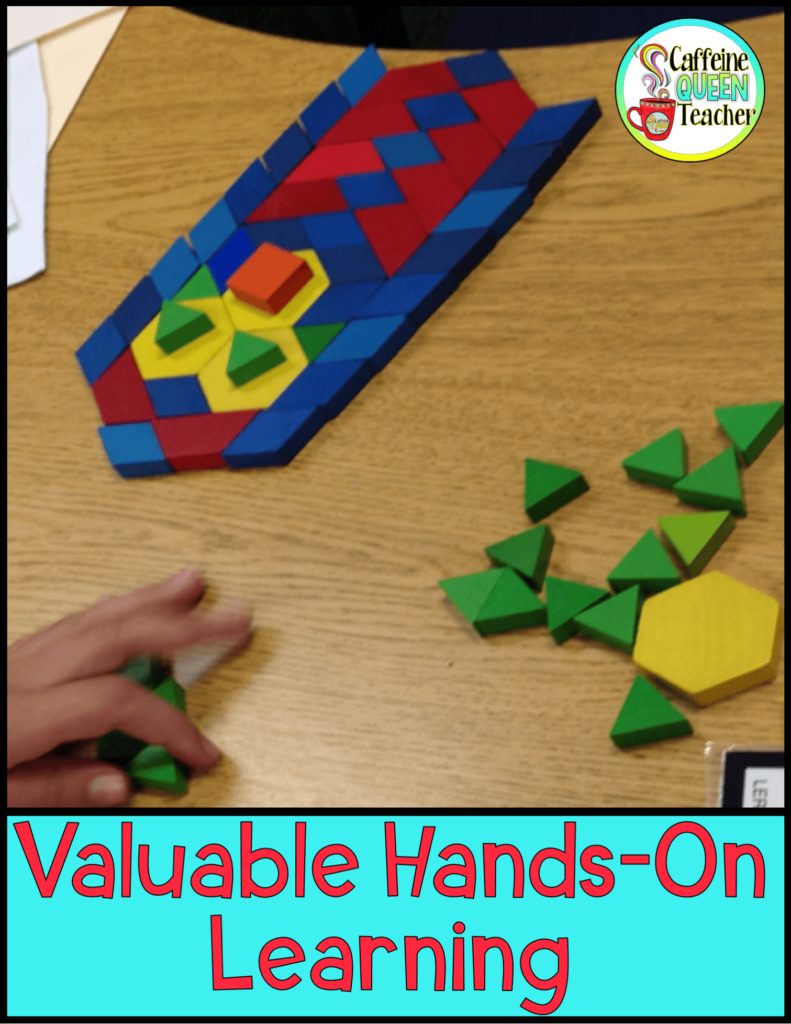
Hands-on learning is another piece I kept coming back to, and honestly, it works for every type of learner, not just the kids who struggle sitting still.
When students are building or creating something, using manipulatives, or working through an experiment, they’re actively involved, not just passively listening. That matters more than many people realize. Kids who tune out during direct instruction will often join right back in the moment there’s something in their hands.
Projects, crafts, experiments, or foldables, the format doesn’t matter as much as the fact that students are actively involved. And here’s what I always loved about it: they’d be so interested in what they were doing that they didn’t even notice how much they were learning. That’s the goal.
2. Keep ‘Em Guessing
To keep students engaged and alert, try using index cards or popsicle sticks with their names written on them. I kept a mug filled with popsicle sticks handy at all times.
During discussions or activities, I’d simply reach into the mug and pull out a stick. Whoever’s name was on it got to answer the question or participate first.
It’s random, fair, and, this is the part that actually matters, students never knew when their name was coming. So they stayed ready.
No need to worry about always calling on the same students or keeping track of who’s had a turn recently. Sometimes I couldn’t remember who hadn’t had a turn, so this helped a lot!
It also took the social pressure off completely. Nobody was being judged for raising their hand or not raising it. The stick decided, and that was that.

3. Include Real-Life in Your Lessons
3. Connect It to Something They Already Care About
When someone presents us with new information, we all run a quick mental calculation: Is this worth my attention? Kids do the same thing, just more visibly.
I remember a student named Malik who was completely checked out during our stem and leaf plot unit. I could see it on his face. He was thinking about basketball, not math.

So I stopped and asked what team he followed.
Then we talked about how a stem and leaf could be used for his favorite player’s stats instead of whatever numbers were in the textbook. It added some value to the lesson.
Fractions connect to baking. Graphs connect to sports stats. Persuasive writing connects to convincing their parents of anything they want. It takes a little extra thought, but when students understand why something matters right now, not someday in the future, they pay attention.

4. Make it a Game
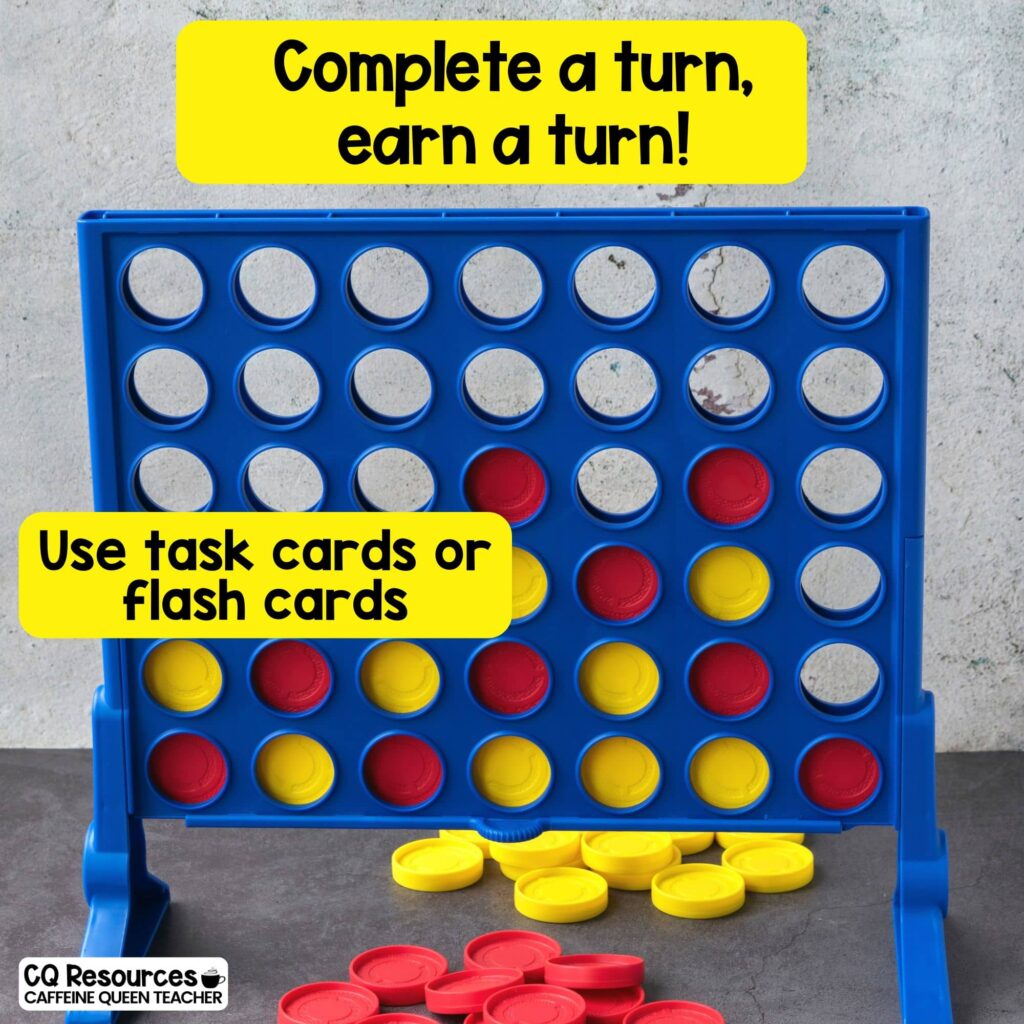
Worksheets have their place. But nothing in my classroom created energy like a good game, and task cards were my most flexible tool for making that happen.

Some days I’d scatter them around the room, one on the heater, one on the bean bag chair, one hanging from the doorway, and send students on a treasure hunt to find and solve them all.
To keep things interesting, I might divide the room into two groups: one tackles the odd-numbered cards while the other takes on the even ones.
Other days I’d divide the class by eye color or shirt color and assign different sets.
Hot Seat
Here’s how we played it:
Split your class into two teams and give each student a whiteboard and a dry-erase marker. Call one student from each team up to the front, and ask a review question. They can be multiple choice, vocabulary, fill-in-the-blank – whatever fits your class.
Both students write their answers and flip their boards at the same time. If they get it right, they win a point for their team. If both students nail it, they both earn a point.
Bonus tip: Sometimes I had students create 10 of their own questions from a chapter, lesson, or reading assignment – then I used those questions for the game. Students enjoyed it, and there’s zero extra prep for you.

Tic-Tac-Toe
Sometimes, I let students play tic-tac-toe with a partner while working in small groups.
All they need are a pile of task cards and some paper or whiteboards. It’s a great way to reinforce skills while having fun!
Here are my Tic-Tac-Toe rules for task cards:
- Place a stack of task cards face down between two students
- Student A flips a card, both students solve the problem
- If Student A gets it right, they place their X or O on the board
- If the answers don’t match, both erase and work it out together before anyone gets the square
I always kept differentiated sets ready, so I could quietly give struggling learners a more accessible version while others tackled harder problems. Nobody had to know. Everyone was playing the same game.
So, why stick to the same old routine when you can gamify learning and make it fun for your students?
Want to learn more about Task Cards? Click HERE to learn “How to Energize Your Teaching with Task Cards!”
5. Teacher Enthusiasm
Your energy really does set the tone of the classroom.
Think back to that teacher from your past who spoke in a monotone voice and made every lesson feel like a snooze-fest. Yikes, right?
Don’t be that teacher!

When you’re genuinely excited about what you’re teaching, your students can’t help but feel the excitement, and their engagement levels shoot through the roof.
Extra Credit ideas:
Here’s a quick list of mini ideas to bring some excitement back to your classroom (and your teaching spirit):
Chat with Students
Take a little extra time to connect with your students. Greet them with a genuine “How was your weekend?” and chat as they pack up.
These little conversations go a long way in building rapport.
Lunch with the Crew
Skip the “work-through-lunch” habit – at least once in a while.
Sit with your fellow teachers to laugh or vent about your wild morning. You’ll feel refreshed.
Plan for Fun
Incorporate something different and exciting like:
- A quick classroom game (think Kahoot or Gimkit)
- A task card scavenger hunt
- A mini room transformation
Small surprises = big smiles (for them and you).
Flip the Script
Mix up your routine for a day:
- Let students “teach” a concept.
- Play music during work time.
- Try Backwards Day
Backwards Day was always a hit. Backwards shirt, backwards schedule, backwards seating. It cost me nothing, and they talked about it for weeks.
I’m not saying you have to perform every single day. Teaching is exhausting, and some days you’re running entirely on caffeine and determination. But even on those days, a small shift makes a difference — a funny story tied to the lesson, a change to the usual routine, something that signals to students that this classroom is a place where things actually happen.
Every classroom is different, and you know your students better than anyone. Take what works here, tweak what doesn’t, and make it yours. That’s what good teachers do.
Frequently Asked Questions
How do I keep students engaged during long lessons?
Break the lesson into shorter chunks and vary what students are doing every 7–10 minutes. A mini-lesson followed by a hands-on activity, then a quick class discussion, then something to create or solve. Those changes and that rotation keep energy up much better than one long stretch of direct instruction.
What is the Turn and Talk method, and does it actually work?
Turn and Talk is exactly what it sounds like: after introducing a concept, students turn to a partner and explain it back in their own words. It takes two minutes, requires zero materials, and does more for retention than many activities I’ve tried. When kids have to say something out loud, they actually have to understand it first.
How do I get students to pay attention without constantly repeating myself?
The popsicle stick method helps more than you’d think. When students know their name could be pulled at any moment, they stay ready. It also takes the pressure off you to remember who’s had a turn, the stick decides, and everyone accepts it as fair.
What are some quick engagement strategies that don’t require a lot of prep?
Hot Seat requires zero prep and works at any grade level. Turn and Talk requires nothing at all. Even just connecting your lesson to something students already care about, like a sport, a game, something in the news, can shift the energy in the room without any extra materials.
Do games actually help students learn or are they just fun?
They’re both, and that’s the whole point. When students are engaged in a game, they’re focused on winning, not on whether the lesson is boring. Task card Tic-Tac-Toe, scavenger hunts, and Hot Seat all require students to actually work with the lessons and material to play. The learning is built into the fun.
What do I do when I just don’t have the energy to be enthusiastic?
Every teacher has those days. A genuine two-minute conversation with a student before class, a small unexpected change to the routine, or even just reminding yourself why you chose this job. Those small things can boost your own energy enough to shift the room’s. You don’t have to be perfect. You just have to show up.
How about reading How to Energize Your Teaching With Task Cards?
About the Author
Written by Jules Rhee, MEd., 30-year teaching veteran. Published 12/10/2015; Updated 4/2/26.
Jules is the creator of Caffeine Queen Teacher (CQT) – Visual Math Organizers + Graph Paper Support. She’s a veteran teacher with over 30 years of classroom experience (SPED, upper elementary, and middle school) and a Master’s in Education (MEd). Jules shares practical, classroom-tested ideas and creates step-by-step resources that help students stay organized, confident, and successful – especially with multiplication and long division.
Read more about Jules here: About Page | Browse resources here: TpT Store