





By Jules Rhee | Published 12/3/2025
This article explains why learning multiplication and long division by hand still matters in grades 3 – 5. Handwritten math builds number sense, place value, problem-solving skills, and confidence – and why calculators can’t replace the standard algorithm.

Why Calculators Can’t Replace Handwritten Multiplication and Division
If you’re a teacher, you’ve heard this question in class.
If you’re a parent, you’ve probably heard it at the kitchen table.
“Why do we have to do this by hand when it’s faster to use my phone?”
And honestly? That question makes sense.
Phones and calculators are everywhere, and adults use them all the time. So why are 3rd, 4th, and 5th graders still writing out all those steps?
The short answer: because handwritten math builds the thinking skills calculators don’t.
Calculators absolutely have a place in math learning.
They just shouldn’t replace learning the standard algorithm.
Why learning multiplication and long division by hand still matters
Handwritten math builds number sense
When students work through problems on paper, they learn how numbers work, not just what buttons to press.
They start to understand:
- why multiplying by tens changes the value
- how regrouping works instead of feeling like a magic trick
- why division is breaking numbers into equal groups
This matters both in school and in real life. A student who understands number size can tell when an answer makes sense and when it doesn’t.
This aligns with CCSS.Math.Content.3.NBT.A.2 and 4.NBT.B.5–6, which focus on place value understanding, not just speed.
A calculator gives an answer.
Solving problems by hand builds understanding.
Calculators don’t teach place value or reasoning
Multi-digit multiplication and long division are really lessons in place value.
Students must understand:
- what each digit represents
- why digits shift during multiplication
- why partial amounts are subtracted in division
- how each step connects logically to the next
This is exactly what CCSS.Math.Practice.MP7 (Look for and make use of structure) focuses on.
When students skip solving problems by hand, they may get correct answers but struggle to explain why those answers work, which is a red flag for future math learning.
Estimation and error detection depend on doing math by hand
One of the biggest hidden benefits of handwritten math is estimation.
Students who solve problems by hand learn to pause and think:
- “Should this answer be bigger or smaller?”
- “Does this answer seem reasonable?”
That’s CCSS.Math.Practice.MP1 (Make sense of problems and persevere in solving them) in action.
Students who rely heavily on calculators often miss mistakes because they:
- don’t estimate first
- trust the screen without question
- don’t know where an error might have happened
Writing out steps slows students down just enough to help them think through their answers.
The standard algorithm still matters (and other tools have their place)
This isn’t about banning calculators or ignoring modern tools.
Models, visual strategies, and calculators all play important roles, especially when math concepts are first introduced.
But the standard algorithm is still essential because it:
- is efficient and reliable
- appears on assessments
- prepares students for algebra
- strengthens problem-solving skills
The real goal is conceptual understanding paired with procedural fluency, which aligns with CCSS.Math.Practice.MP6 (Attend to precision).
When students solve problems by hand, they gain accuracy, and their understanding finally clicks.
Why handwritten math feels hard for many students
Parents often say, “I never learned it this way,” and students say, “There are too many steps.”
Most students aren’t struggling with the math itself. They’re struggling with:
- keeping numbers lined up
- remembering what comes next
- managing too much information at once
This is cognitive overload, not lack of ability or skill.
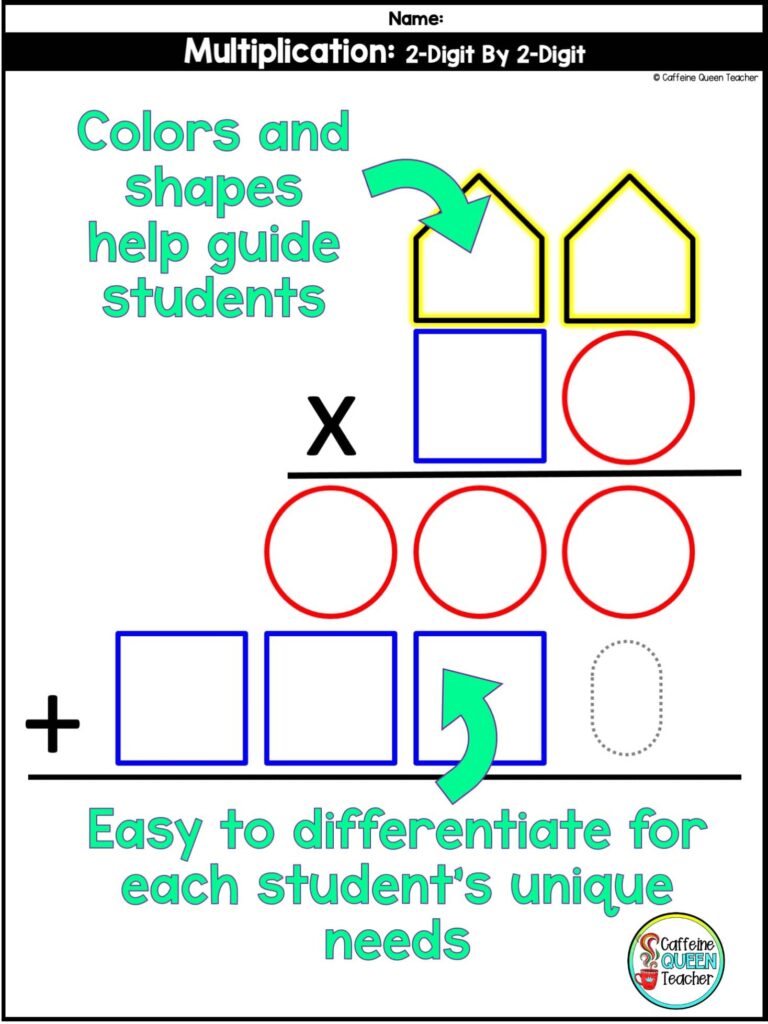
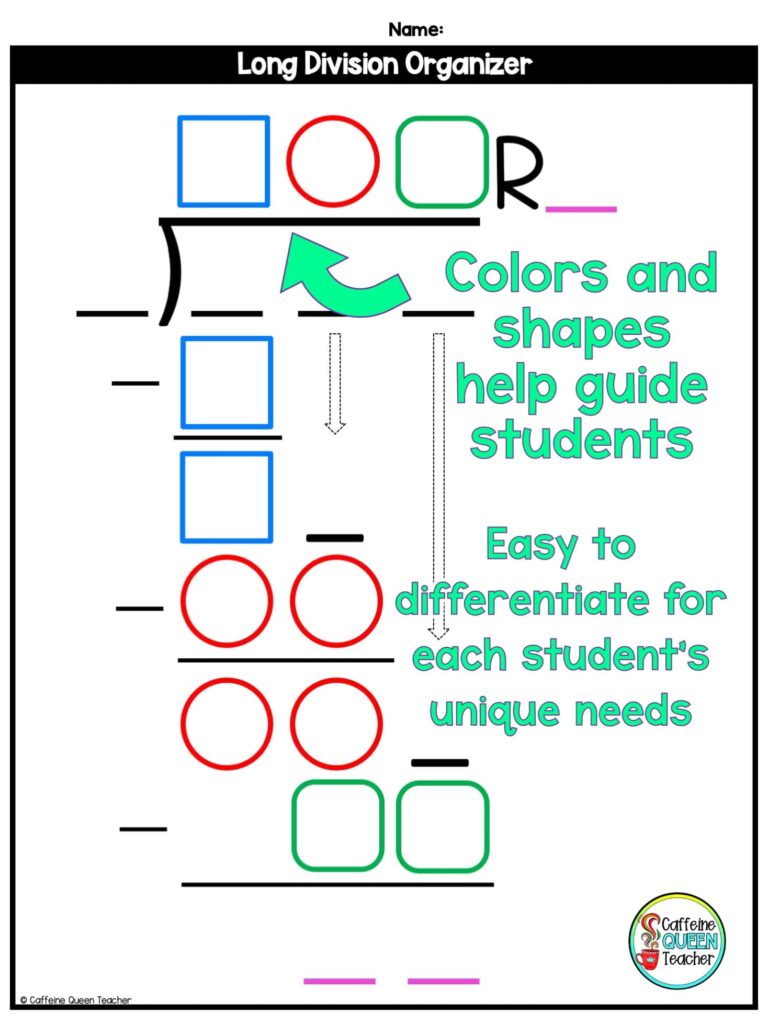
That’s why structure and visual support matter so much.
How visual organizers make handwritten math less overwhelming
Visual organizers don’t give answers.
They give clarity.

They help students:
- keep place value aligned
- follow steps in the correct order
- focus on reasoning instead of messy layout
- work more independently
This supports CCSS.Math.Practice.MP5 (Use appropriate tools strategically) – tools that support thinking instead of replacing it.
When students can see the process clearly, solving problems by hand becomes easier, and confidence starts to grow.
Confidence grows when students master the process
This is where the magic happens.
Once students truly understand the steps:
- they stop guessing
- they stop freezing
- they believe in themselves
Students realize they can work through obstacles and succeed.
That confidence carries into future math, testing situations, and even everyday problem-solving. It’s not just about math; it’s about learning that they can do hard things.
Tips for teachers and parents supporting math at home and school
Estimate before calculating
Ask students what the answer should be close to before solving.
Talk about calculators as helpers, not replacements
A simple explanation works for kids:
“Calculators are great when you already understand what’s happening.”
Use structured practice
Clear layouts and consistent steps help students focus on thinking instead of confusion.
A helpful bridge between understanding and fluency
If students need support with handwritten multiplication and long division, without frustration, my
2-Digit Multiplication and Long Division Practice Worksheets and Organizers Set was created to make the process clear and confidence-building.

It helps students:
- follow the standard algorithm step-by-step
- keep work organized and aligned
- build independence through consistent structure
- move from guided practice to confidence
⮕ You can find the full set here
Handwritten math isn’t about doing things the “old way.”
It’s about giving students the thinking skills they need, in school, at home, and beyond.
Want to read more?
How to Teach Long Multiplication and Long Division
It’s Not “New Math” – It’s Just Better Math
How to Boost Learning with Color by Number Practice Pages
About the Author
Written by Jules Rhee, MEd, and a 30-year teaching veteran; published 12/15/2025.
Jules is the creator of Caffeine Queen Teacher (CQT) – Visual Math Organizers + Graph Paper Support. She’s a veteran teacher with over 30 years of classroom experience (SPED, upper elementary, and middle school) and a Master’s in Education (MEd). Jules shares practical, classroom-tested ideas and creates step-by-step resources that help students stay organized, confident, and successful – especially with multiplication and long division.
Read more about Jules here: About Page | Browse resources here: TpT Store
