



By Jules Rhee 10/25/2026
Do you recognize this?
You ask your class to write, and half of them just sit there with their pencils down. A few want to know how long it has to be. One asks if they can draw instead.
I think that’s happened to nearly all of us.
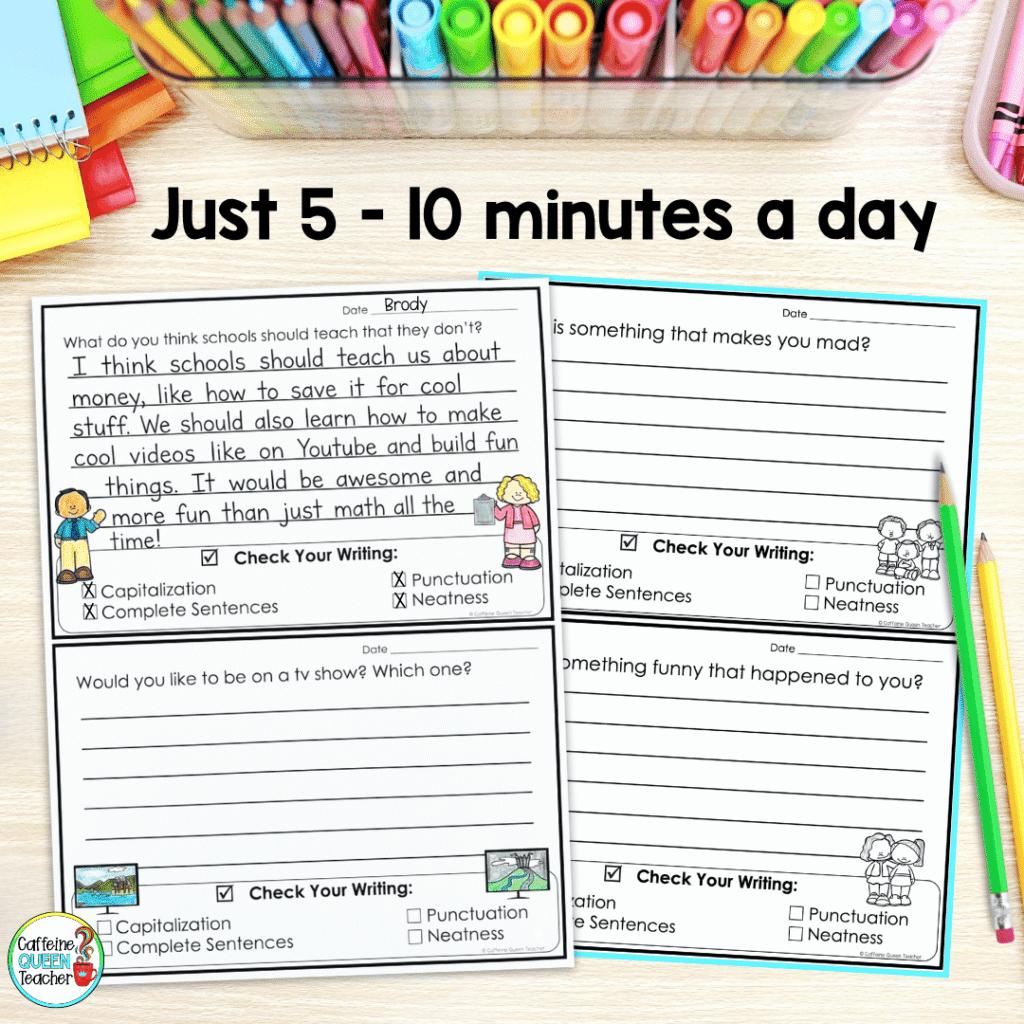
Quick writes are one of the easiest ways I know to get 3rd and 4th graders writing every day. They take about five minutes and need almost no prep. And the more often kids do them, the more comfortable they get putting words on paper.

Below you’ll find a simple 5-minute routine and 10 prompts you can use tomorrow.
*Keep reading to find out how to try a FREE week of Quick Writes!
What Is a Quick Write?
A quick write is a short, timed writing activity where students respond to one prompt for about 5 to 10 minutes. The goal is to get ideas down on paper, not to write a polished piece.
Kids don’t write a rough draft or a final copy. They read the prompt, think for a minute, and start writing.
For 3rd and 4th graders, that low-pressure setup matters. A student who freezes or moans when you say “essay” may fill half a page when you say “quick write.”
Why Quick Writes Work in 3rd and 4th Grade
Third and fourth graders are just starting to write longer pieces, and a lot of them run out of steam after a few sentences. Writing a little every day builds their stamina slowly, without the pressure of a big assignment.
Kids also get better at coming up with ideas. When they write about something new every day, getting started doesn’t feel like such a big deal.
And you get a quick look at where each student is. Walk around for a few minutes while they write, and you’ll see who needs help with complete sentences and who’s ready for a bigger challenge.
In my experience, even the students who grumbled the most about writing eventually got used to the routine. One day, you’ll realize that nobody’s complaining anymore. They’re just getting out their Quick Writes and getting busy. And that’s a pretty good feeling!
Two Simple Quick Write Routines
Every class is different, so here are two routines. Pick whichever fits your day, or mix and match. Routine 1 works well at the start of your writing block, when you’re establishing a new writing routine. It uses a little partner talk helps kids get ideas flowing. Routine 2 is a quiet, more independent start while you take attendance and get ready for class.
Routine 1: Think, Write, Share (About 5 Minutes)
This one fits easily into the start of your writing block. Adjust the times to fit your class.
- Put the prompt up (30 seconds). Read it aloud so everyone can get started, including students who are still building their reading skills.
- Think time (1 minute). Students talk to a partner or jot down a few words. No full sentences yet.
- Write (3 to 5 minutes). Set a timer. The one rule is to keep your pencil moving. If a student gets stuck, they can write “I’m thinking about…” and keep going until something comes to them.
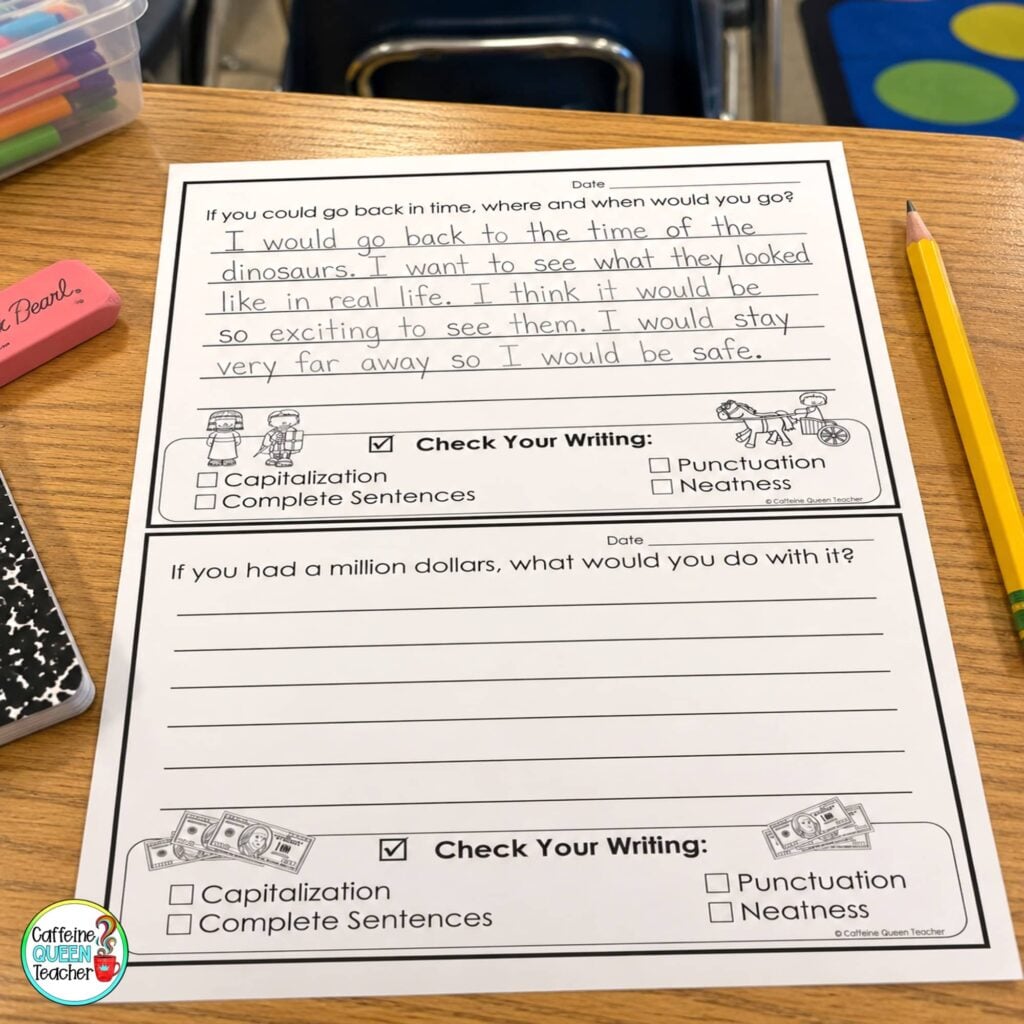
- Quick check (30 seconds). Students reread and check over their work to fix obvious mistakes. A short checklist on the page makes this step easy.
- Share (optional, 1 to 2 minutes). One or two volunteers read theirs aloud.
For 3rd graders early in the year, start with 3 minutes of writing and add a minute every few weeks.
Routine 2: The Quiet Routine (5 to 10 Minutes)
I always liked starting my class with a few minutes of writing. It gave students something useful to do while I took attendance and got everything ready for class. Plus, we all know how nice it is to have students busy and settled while we’re trying to get started!
Getting Started With Quick Writes
Quick Writes work well for morning work, bell ringers, writing warm-ups, or even as a quiet activity after recess. You really only need about 5 to 10 minutes.
1. Prepare the Quick Writes.
Print the prompts and put them in a binder, folder, or stapled booklet for each student. Whatever works best for you! You can print several weeks at a time or prepare enough for the whole grading period.
2. Teach the routine.
Spend the first few days showing students exactly what you expect. Practice getting out their writing materials, finding the next prompt, and getting started without waiting for you to tell them what to do.
It’ll take a little practice, but eventually students will know to get out their Quick Writes and start writing as soon as they come into the classroom. That’s what you’re working toward!
3. Set a timer for 5 to 10 minutes.
You decide how much time works best for your class. Five minutes might be plenty, especially at first. As students get used to writing every day, you can gradually stretch out the time.
You might be surprised how much more students can write once they’ve had some practice.
4. Keep writing time quiet.
This was an important part of my routine. During Quick Writes, students worked quietly and independently. No talking with neighbors or getting up to do something. Just a few minutes to think and write.
Students read the prompt and write their responses. Remind them that they’re not writing a whole story or a long essay. They’re just practicing getting their thoughts down on paper and putting together good sentences.
5. Wrap up and move on.
When the timer goes off, have students use the checklist on their Quick Writes page to check their work. Then they can put their materials away and get ready for the next activity.
Once students get used to the routine, you shouldn’t have to spend much time explaining what to do each day.
6. Share the writing occasionally.
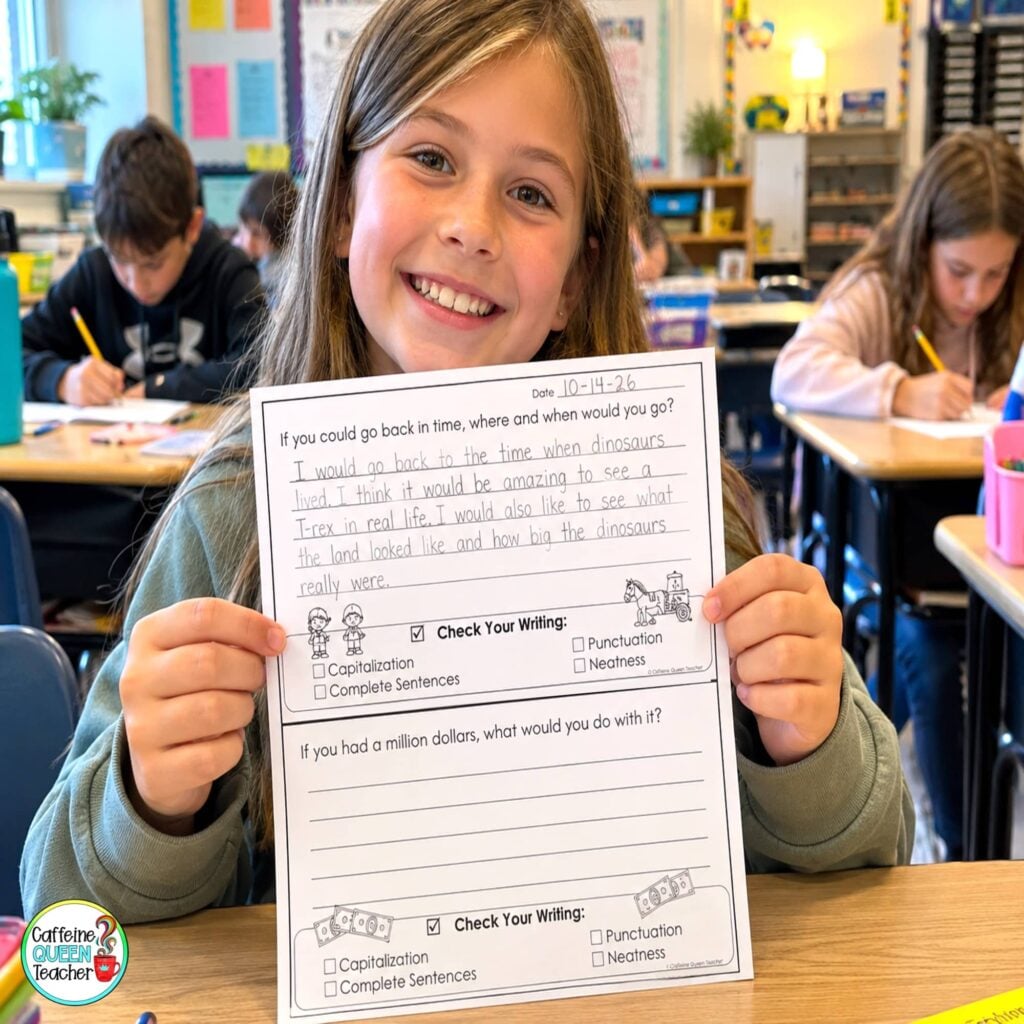
Once a week, or whenever you have a few extra minutes, let students share what they’ve written.
I think there’s a lot of value in letting students hear how their classmates answered the same question. Sometimes another student will come up with an idea or a way of saying something that nobody else thought of. Plus, don’t underestimate how much learning students gain from each other.
It’s also nice for students to have a chance to show off their writing a little! They might even try a little harder on their next Quick Write because they know they could be sharing it with the class.
10 Quick Write Prompts for 3rd and 4th Grade
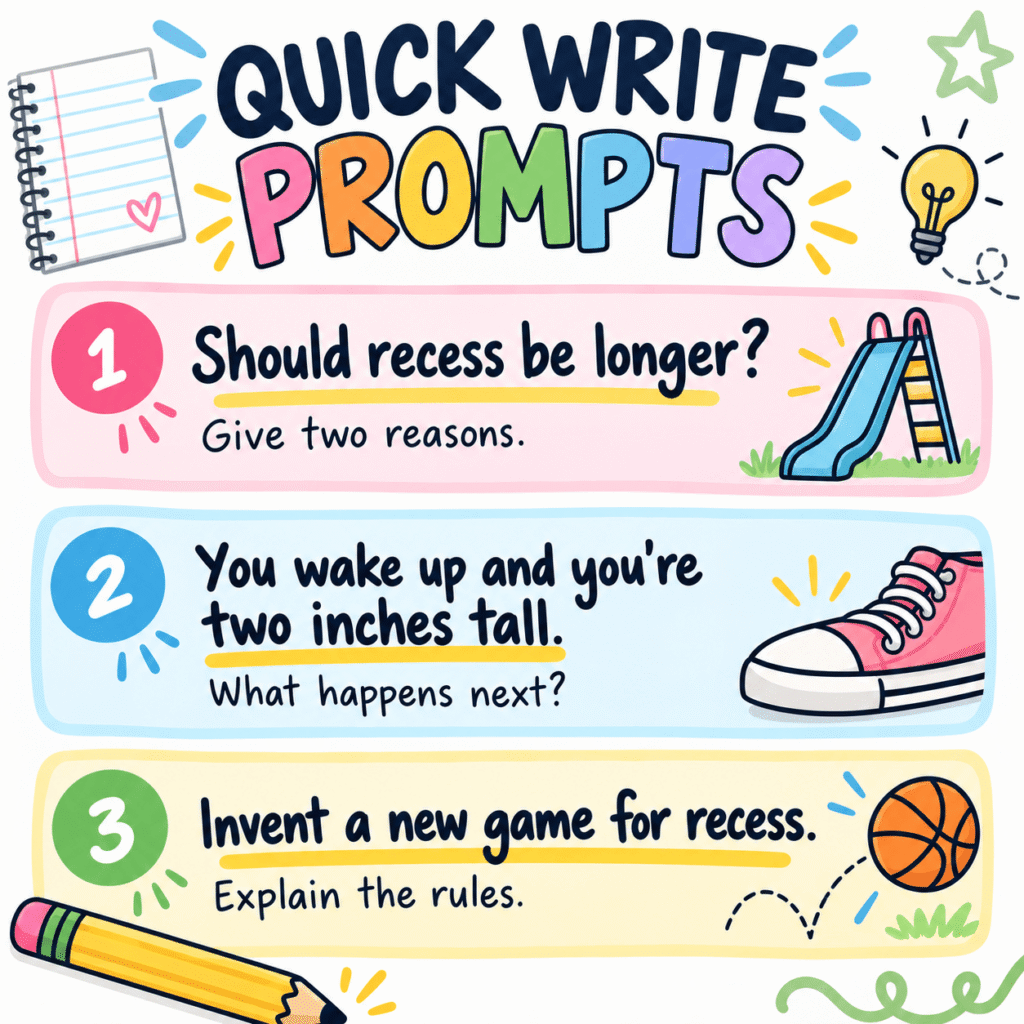
Here are 10 prompts to get you started. I mixed opinion, how-to, story, and just-for-fun prompts so kids practice different kinds of writing.
- If you could have any animal as a class pet, which one would you pick? Why?
- Describe your favorite place in the world so someone else could picture it.
- Explain how to make your favorite sandwich, step by step.
- Write about a time something didn’t go the way you planned.
- Should recess be longer? Give two reasons.
- You wake up and you’re two inches tall. What happens next?
- What’s something you’re good at that most people don’t know about?
- Invent a new game for recess and explain the rules.
- Which is better, a rainy day or a snowy day? Why?
- Write a letter to yourself to open at the end of the school year.
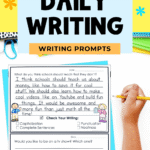
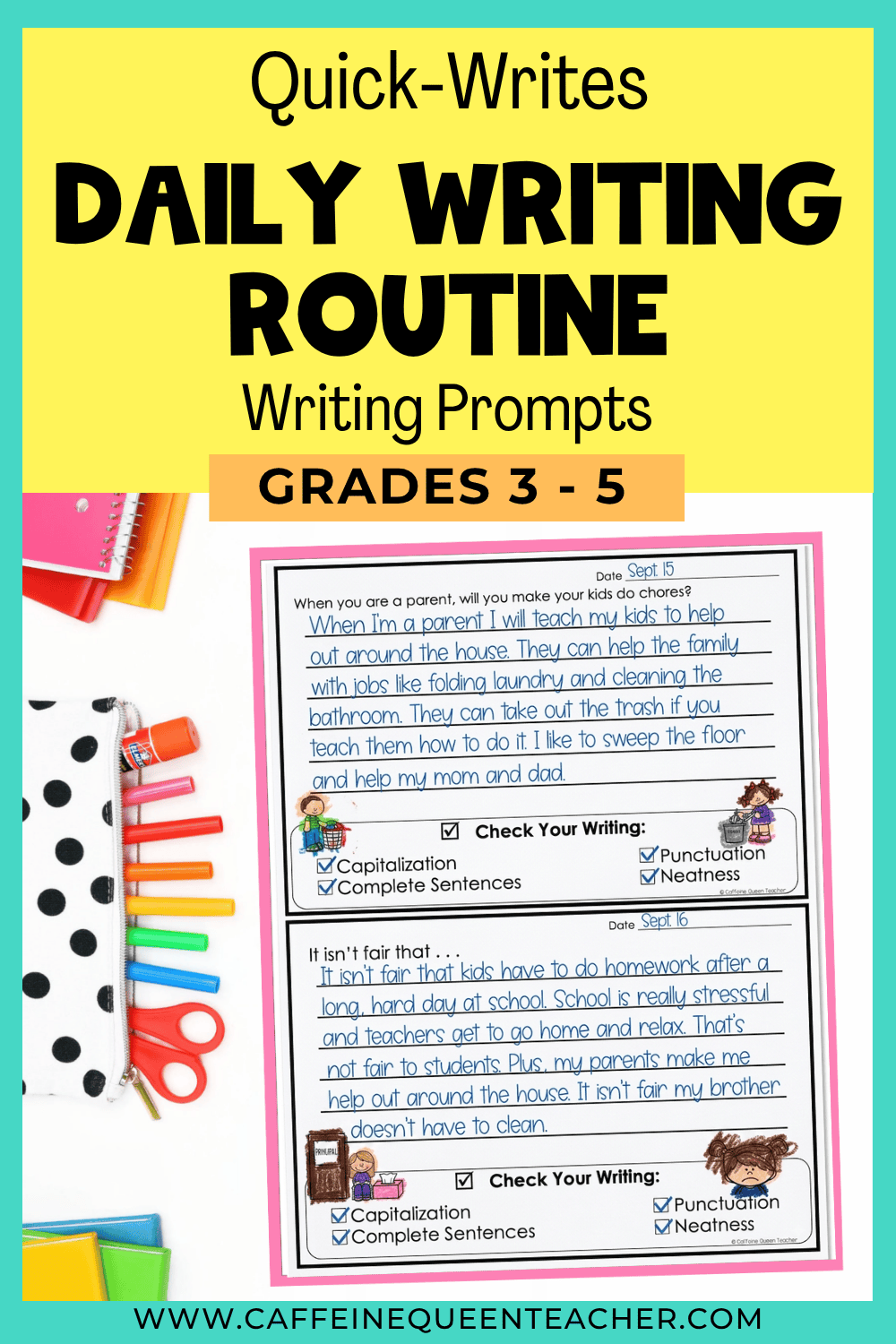
Want a whole year of prompts ready to go? My Quick Writes Writing Journal Prompts set has 208 prompts for 5 to 10 minute warm-ups, with a writing checklist on every page. It comes in a printable version and a Google Slides version, and teachers have rated it 4.81 stars.
You can try a week of FREE prompts – just check out the preview on TPT to try a few days of prompts with your class. Click the button below!
Quick Writes vs. Journal Writing
They sound alike, but they do different jobs in your classroom.
| Quick writes | Journal writing | |
|---|---|---|
| How long | 5 to 10 minutes | Often longer, sometimes a whole writing block |
| Prompt | One short, specific prompt | Can be open-ended or the student’s choice |
| Main goal | Get ideas down fast and build the habit | Reflect and build a longer piece over time |
| Checking | A quick checklist | Reading and responding to entries |
If you’re looking for more traditional journal writing prompts, here’s another article about how I set up Monthly Journal Writing Made Easy when I taught younger students. It’s a little different and they feature space on the page for students to draw pictures to go along with their writing.
Turn a Quick Write into a RACE Response
Once a week, try a quick write that starts with a short passage instead of a prompt. Students read a paragraph or two, then answer one question using the text.
For example, after reading a short passage about honeybees, the question might be: “How do honeybees help plants? Use one detail from the text.”
It’s good practice for constructed responses, without the pressure of a full assignment. Students who already know the RACE writing strategy can use the steps they’ve learned. For students who don’t yet, it’s an easy first step toward citing evidence.
Teacher Tips for Using Quick Writes
- Let students choose a prompt occasionally. My students liked having a choice, but there’s always that student who spends the whole five minutes trying to decide which question to answer. I found it easier to give them a choice between two or three prompts rather than the whole booklet. That way, they still got to choose, but we didn’t lose all our writing time.
- Use Quick Writes for handwriting grades. This is an easy way to get a handwriting grade without adding another assignment to your day. Since students are already writing, you can occasionally choose one of their Quick Writes to check for neatness and handwriting.
- Don’t feel like you need to grade everything. I wouldn’t grade every Quick Write. The point is to get students writing regularly. You can collect one now and then to check capitalization, punctuation, complete sentences, or just to see how their writing is coming along.
Quick Writes FAQ
How long should a quick write be?
About 5 to 10 minutes. Early in 3rd grade, 3 minutes is plenty, and you can build up from there. Start with a shorter time and gradually build in additional time as students build endurance.
How often should students do quick writes?
Most days, if you can. Short, regular practice helps more than one long writing session a week. Once writing becomes a consistent routine, students won’t dread it or fear it. Writing will start to feel natural and enjoyable.
Do you grade quick writes?
Usually not like a finished piece. A completion check, or a quick look at one skill like end marks, is enough.
Can quick writes be digital?
Yes. Students can type their responses in Google Slides, one prompt per slide.
One last thought: Don’t make Quick Writes more complicated than they need to be. The real value is in getting students into the habit of writing a little bit every day. Five or ten minutes might not sound like much, but think about how much practice that adds up to over a school year!
Looking for Ready-to-Print Writing Prompts?
If you want prompts that are ready to print or assign, grab the Quick Writes set on TPT. And for more ways to build writing into your day, read Daily Writing Time Offers Enormous Benefits for Students.
About the Author
Written by Jules Rhee, MEd, and a 30-year teaching veteran; latest update 10/23/2026.
Jules is the creator of Caffeine Queen Teacher – Text Evidence + Math Organizers + Graph Paper. She’s a veteran teacher with over 30 years of classroom experience (SPED, upper elementary, and middle school) and a Master’s in Education (MEd). Jules shares practical, classroom-tested ideas and creates step-by-step resources to keep students organized, confident, and successful – especially with text evidence, multiplication, and division.
Read more about Jules here: About Page | Browse resources here: TpT Store