




By Jules Rhee, MEd | Latest update 9/10/2026
Trying to keep students focused during Halloween and fall?
I remember those weeks well – when costumes, candy, and classroom parties took over every kid’s brain. If you’re in the classroom, I’ve got you covered with simple, low-prep strategies that keep learning on track without losing the seasonal fun.
The best part about this time of year is the excitement in the air – and yes, you can use that energy to your advantage. With just a few tweaks, you can keep kids engaged while sneaking in some serious learning.
Here are a few of my favorite ways to help students stay motivated and focused during the Halloween season:

Tip #1: Keep the Structure (and add some fun!)
Students thrive on routine – and the closer you stick to your normal schedule, the better your days will go. Trust me, I learned this the hard way more than once!
When we start tossing out routines in favor of party-mode lessons, that’s when behavior tends to unravel. So here’s the trick: stick with your daily structure, but season it with a little Halloween flair.
Think: same centers, just with spooky task cards. Same writing block, but with Halloween-themed prompts. A little seasonal spin goes a long way – and it keeps kids grounded in routines they know.
Tip #2: Swap in Seasonal Lessons
You don’t have to change your lesson plans completely – just give them a seasonal twist.
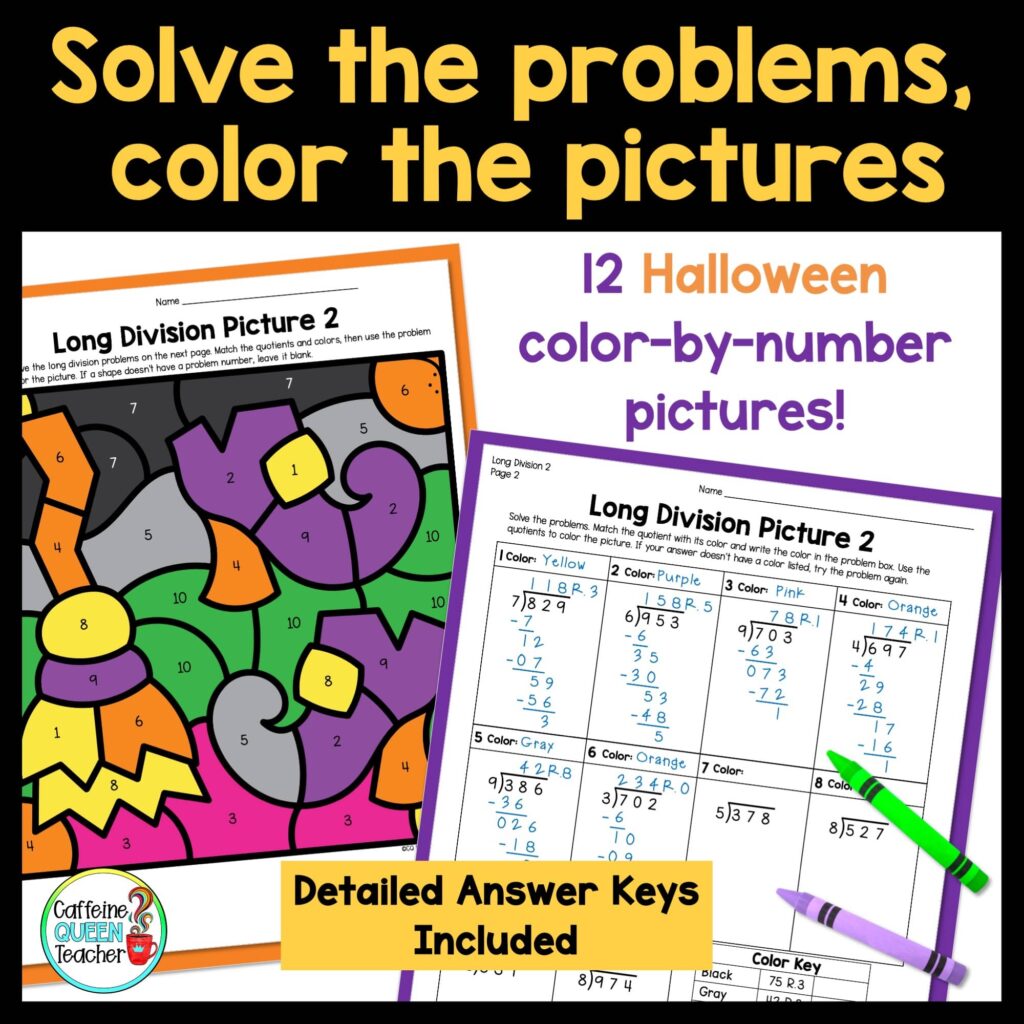
Back in my classroom days, I swapped out the usual stories and passages for Halloween and fall-themed ones, and engagement instantly went up. It works the same in math – instead of the regular workbook, try a fun set of coloring pages or themed worksheets with multiplication, addition, or subtraction practice.
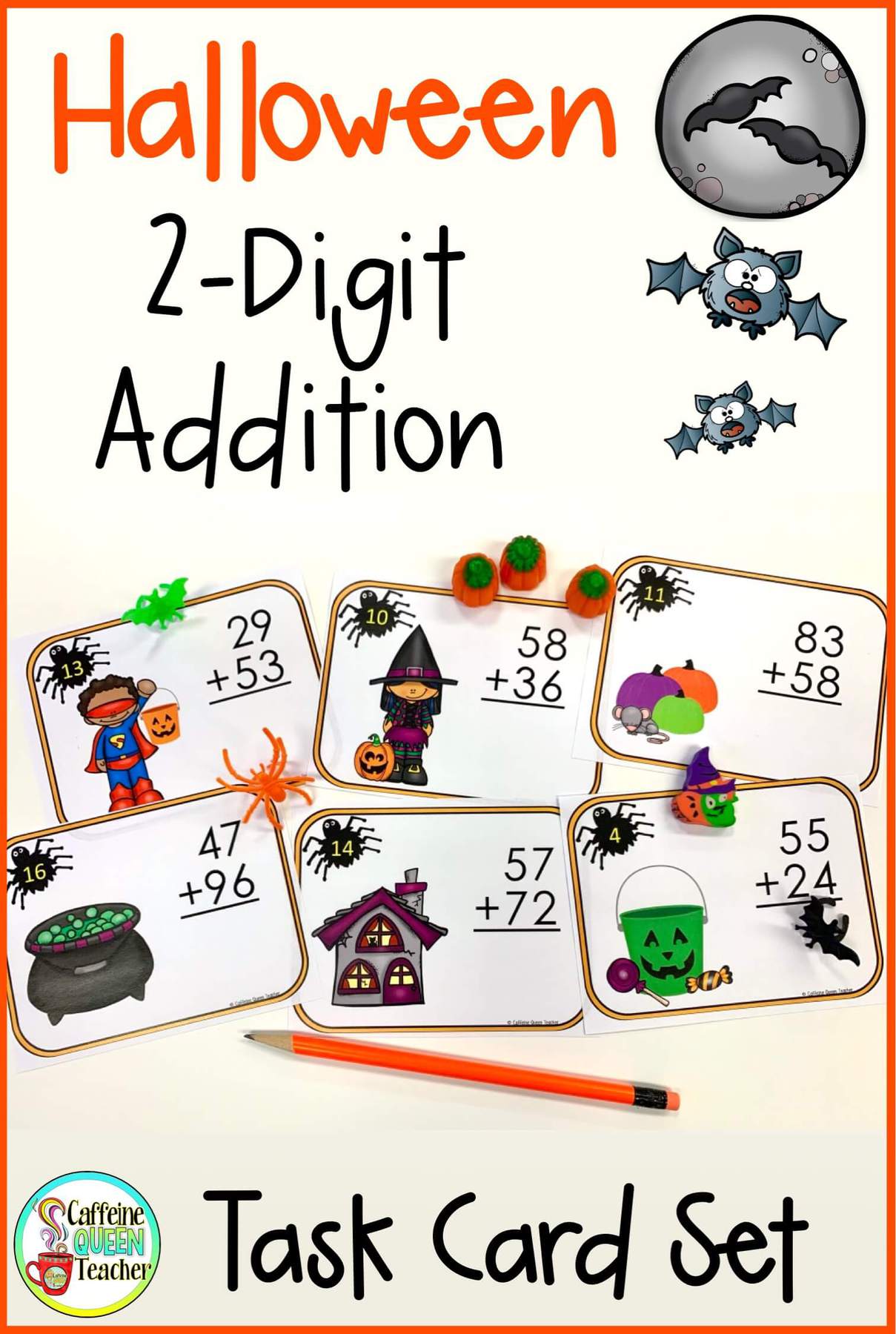
Bonus: those Halloween coloring pages double as easy bulletin board displays or locker decorations. Win-win!

One thing I learned pretty quickly: not every part of the school day is created equal during Halloween week.
If I had something brand-new or challenging to teach, I tried to get to it earlier in the day when students were fresher. Later in the afternoon was a much better time for review, partner activities, task cards, writing, or something a little more hands-on.
That doesn’t mean giving up on learning after lunch. It just means being realistic about when your students are most likely to give you their best attention.
Sometimes a small change in the order of your lessons can make the whole day go better.
Use the Fun as Something to Look Forward To
You don’t have to turn every worksheet, lesson, and activity into Halloween.
I never did.
Sometimes a seasonal activity works better when it comes after the regular lesson.
“We’ll finish our math lesson first, and then we’ll do the Halloween review game.”
That little bit of anticipation can go a long way.
Students still get the fun they’re looking forward to, but your whole day doesn’t turn into one giant Halloween party.
Remember That Not Everyone Celebrates Halloween
Depending on your school and your students, you may have children who don’t celebrate Halloween.
Fortunately, it’s pretty easy to keep the seasonal fun without making everything about Halloween.
Fall leaves, pumpkins, apples, bats, owls, nocturnal animals, mysteries, changing weather, and autumn themes can work just as well.
You can still make October feel different and fun without putting any student in an uncomfortable position.
Tip #3: Get Them Moving
You’ve probably already noticed that kids get extra wiggly in the fall. I remember watching my entire class practically bounce off the walls as we got closer to Halloween week. So instead of fighting it, channel that energy into movement-based learning.
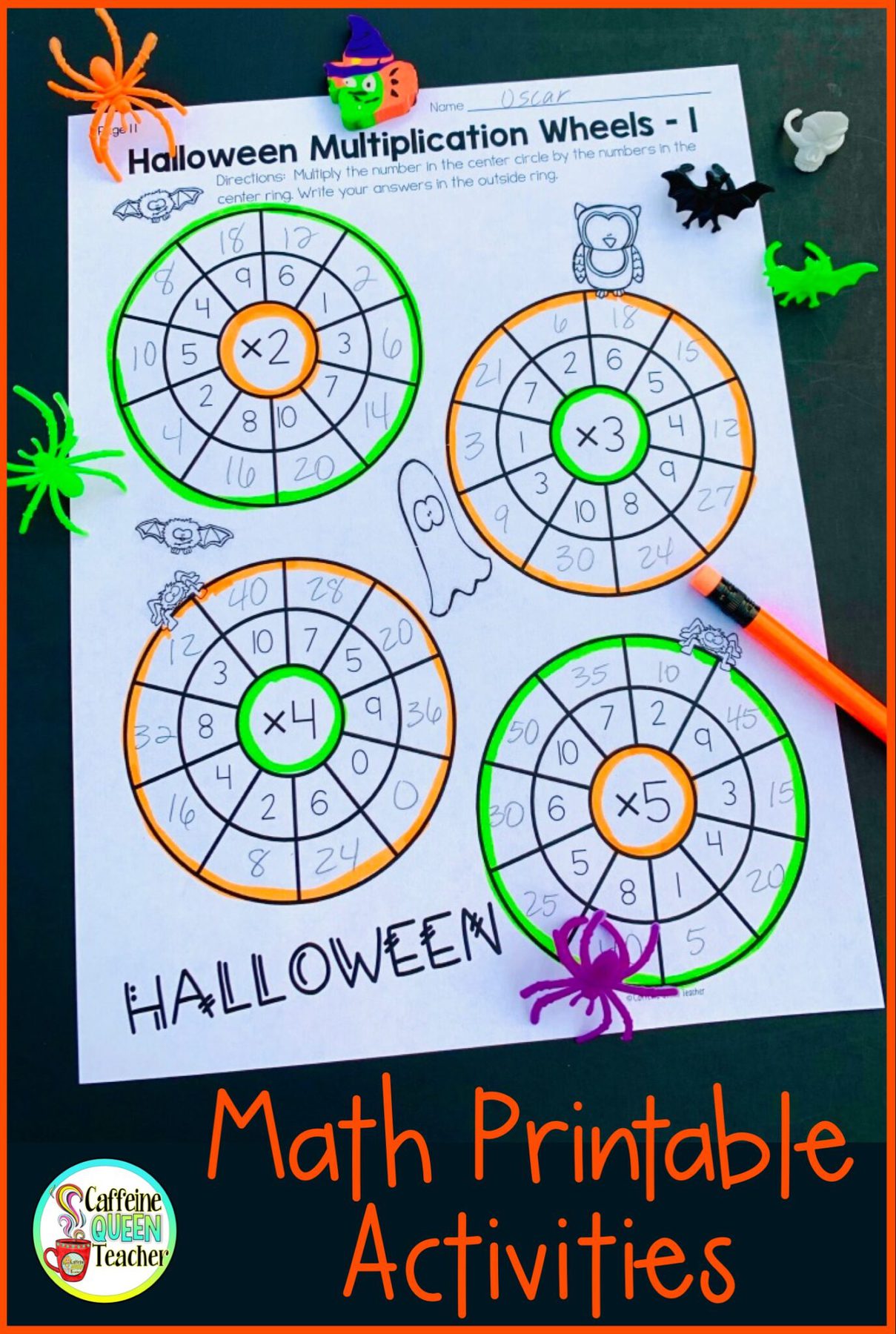
Task cards are one of my go-to suggestions. They’re low prep, high engagement, and perfect for controlled movement around the classroom. Tape them to the walls, spread them on desks, or set up a Scoot-style game – students rotate from card to card, working at their own pace while staying on task.
You can use them whole-group, in pairs, or even for independent work. And if they’re Halloween-themed? Even better.
One of my favorite sets includes 20 beginner-level Halloween multiplication story problems – great for building early fact fluency with a seasonal twist. These work beautifully for Scoot, board games, partner work, or a quick math center.

Need Ideas for Using Task Cards? Start Here!
Not sure how to use task cards beyond your math center? I’ve got you.
Task cards are versatile – they work for whole-group games, independent practice, Scoot, scavenger hunts, early finishers, and more.
And differentiation is pretty easy. You can level up or down based on student needs while keeping everyone working independently and engaged.
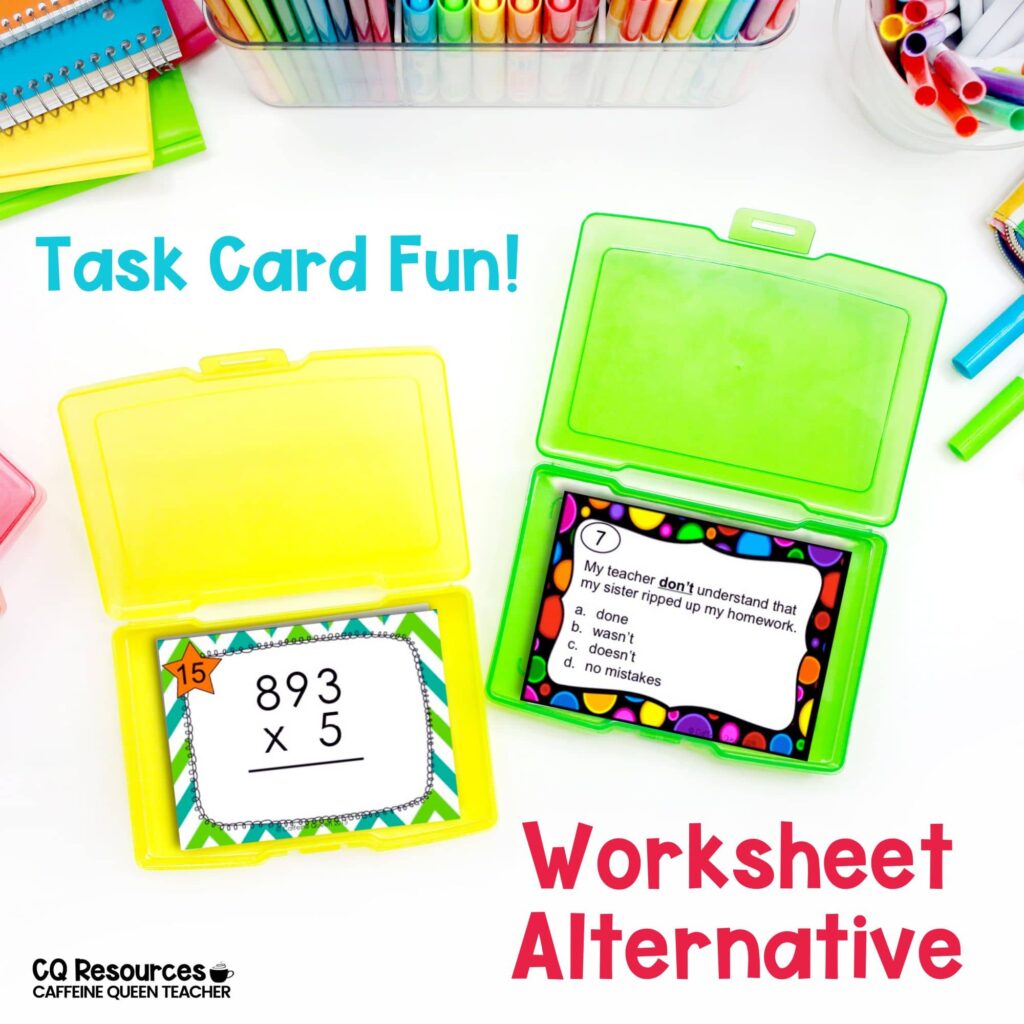
Want a little inspiration?
Click HERE to read about some games and strategies you can use TODAY in your classroom!
Have a Plan for the Come-Down
The hardest part of a classroom party, parade, special event, or extra-exciting activity usually isn’t the actual event.
It’s what happens afterward.
Going straight from cupcakes, costumes, and excitement into a brand-new math concept? That’s probably not your best bet.
I liked having something quieter planned and ready to go.
Try:
- independent reading
- a directed drawing
- a seasonal read-aloud
- quiet writing
- a familiar review page
- a simple partner activity students already know how to do
Give everyone a few minutes to settle back down before expecting full academic focus again.
That includes the teacher. Wink-wink.
Give Students Choices When You Can
A little choice can be surprisingly motivating this time of year around holidays.
And you don’t have to create five different assignments. Just keep it simple.
You might let students choose:
- which writing prompt to answer
- which task cards to complete first
- which fall picture to color after finishing their math
- where to sit for independent reading
- which review activity to complete
The work stays the same, but students feel like they have a little more control.
And when Halloween excitement is already making everyone slightly squirrelly, that can help.
Tip #4: Turn Halloween Excitement Into Writing
Back when I was in the classroom, I loved getting creative with our fall writing projects – even though I’ll admit, I wasn’t naturally the “Pinterest teacher.”
Thankfully, Pinterest does exist, and it always saved the day with quick, doable ideas that looked great without taking hours to prep.
One of my favorite Halloween lessons was centered around writing fictional narratives with spooky, autumn vibes.
We’d read many short eerie stories together on the carpet and break down what made them work (or not).
More specifically, that meant discussing about what we liked and admired about each story, why we liked it or didn’t like it, and how the author used certain words. It’s a deep dive into the author’s craft.
Then students would use those same techniques to write their own.
To get the creativity flowing, we’d brainstorm a class list of vivid adjectives, verbs, and phrases. I’d type them up and hand them out — and students loved spotting each other’s words in their classmates’ writing. It made everyone feel like a real author.
Plus, students felt like successful writers and authors.
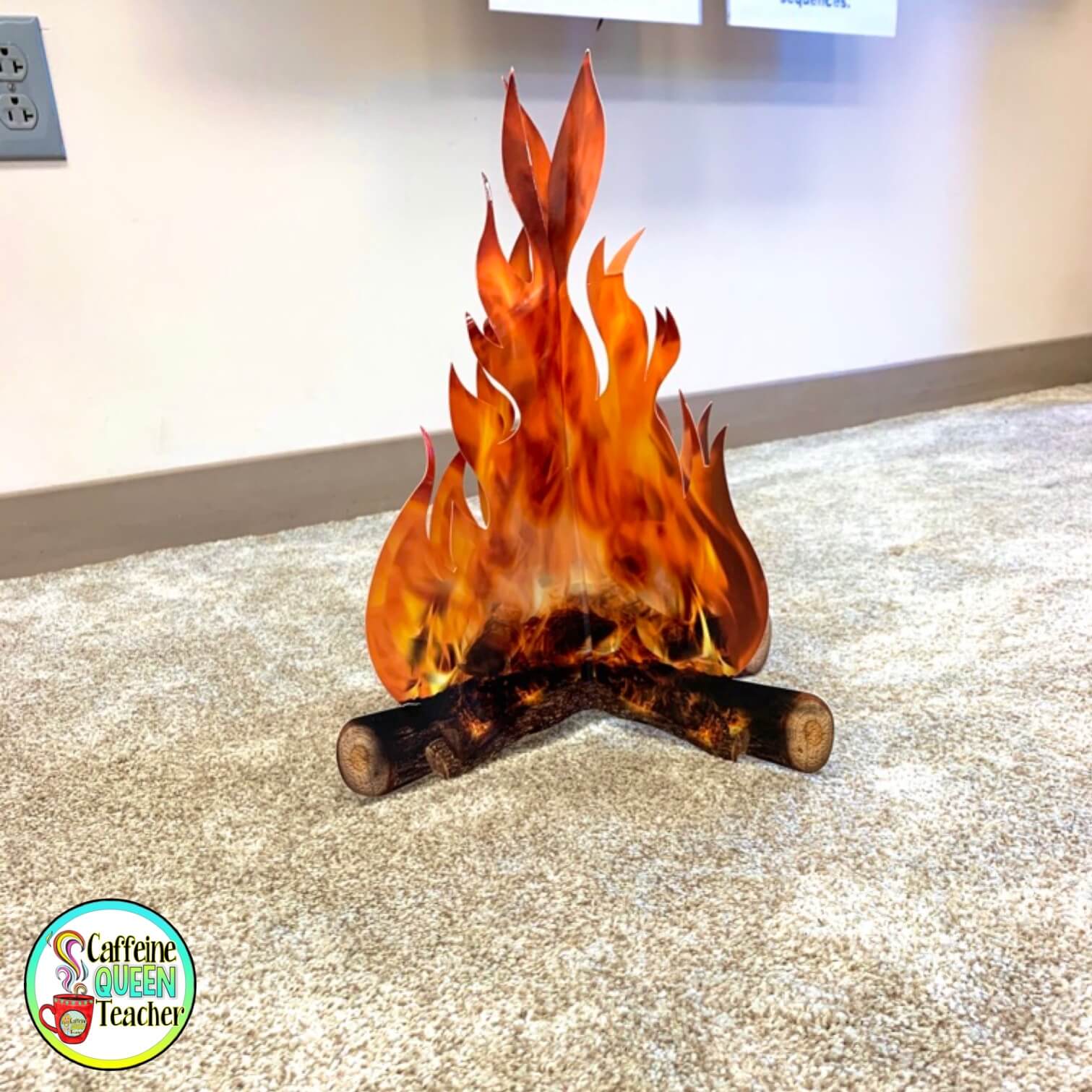
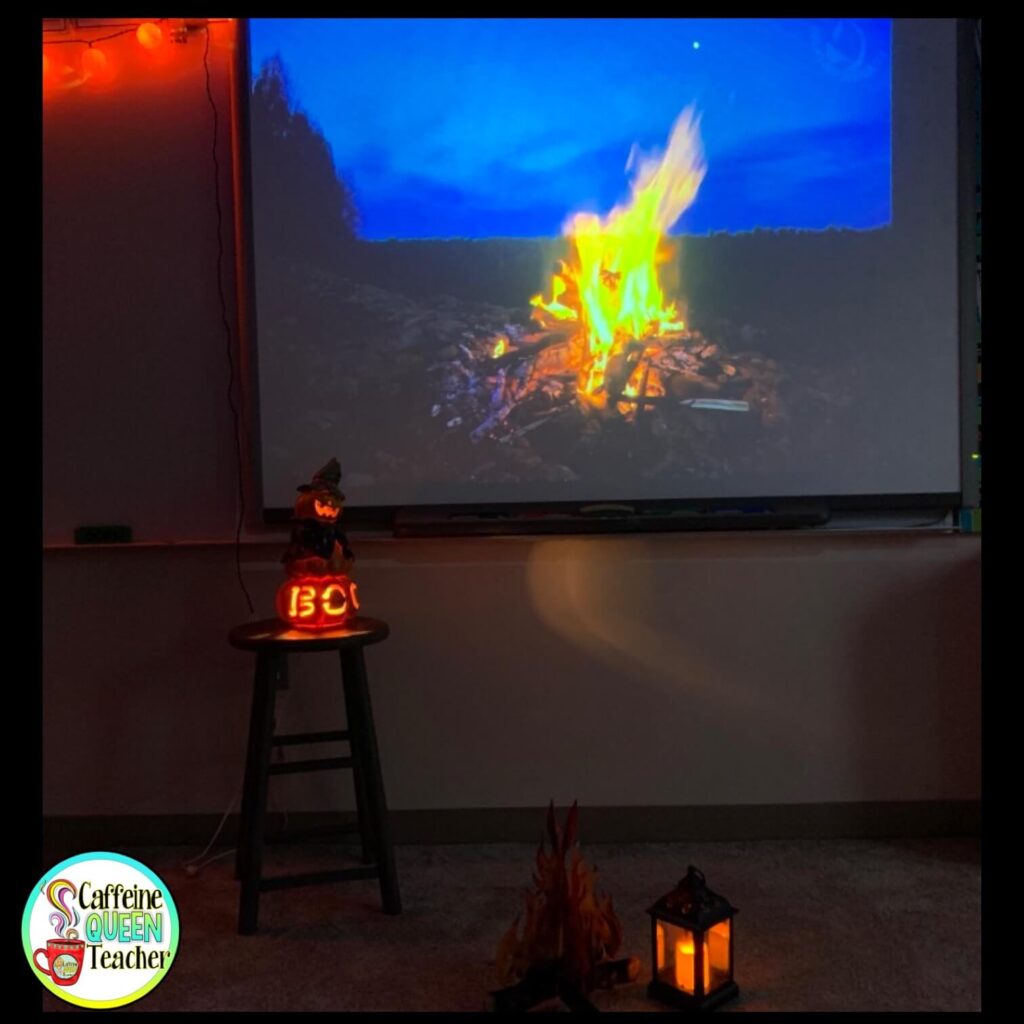
Everyone’s favorite part? The campfire scene.
For our final celebration, I’d set up a fake classroom “campfire” with flickering lanterns, glowing string lights, and a crackling fireplace video on the Smartboard. We’d dim the lights, gather in a circle, and read our spooky stories out loud using dramatic tone and pacing.
We took the time to practice reading our stories in “just the right” voice and tone. For example, if it’s a scary story, students practiced voice changes to add suspense and excitement.
It was always the perfect blend of fun and focused – and students were so proud of their work.

Tip #5: A Few Easy Ideas That Don’t Require a Whole New Lesson
Sometimes you don’t need another entire lesson or resource. You just need a small change that makes an ordinary lesson feel different.
Try one of these:
- Turn off a few lights and let students read with flashlights.
- Write math problems on pumpkin-shaped sticky notes.
- Add a silly Halloween or fall Would You Rather question to morning work.
- Let students estimate how many pieces of candy corn are in a jar, then use the guesses for graphing or comparing numbers.
- Read a short mystery and stop before the ending so students can make predictions.
- Brainstorm spooky verbs and adjectives before writing.
- Let students earn five minutes of a seasonal directed drawing after completing an assignment.
- Put review questions around the room and turn regular practice into a scavenger hunt.
None of those ideas requires changing your entire lesson plan.
That’s usually the sweet spot!
Tip #6: Use Simple, Seasonal Behavior Management Strategies
Let’s be honest – the week of Halloween can test even the most patient teachers. I found that quick, visual behavior systems made a big difference, especially when energy levels were high.
Here are two favorites I used in the classroom – both easy, low-prep, and super effective:
1. The Holiday Word Game
Pick a seasonal word (like H-A-L-L-O-W-E-E-N) and write it where everyone can see it.
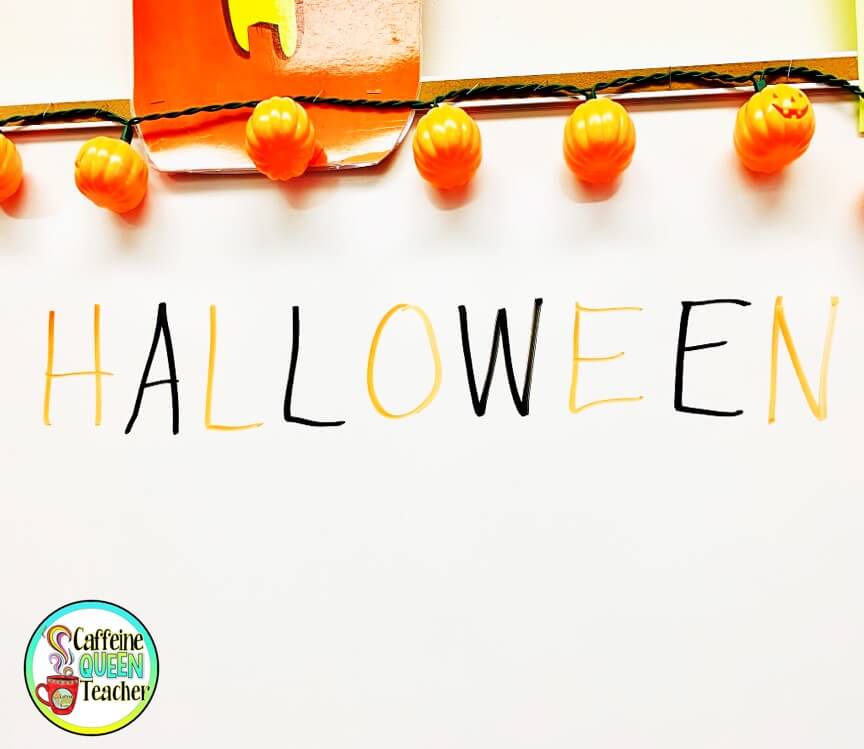
- If the class gets too noisy or off-task, erase a letter (no lecture needed).
- When they’re showing great behavior? Add one back.
Challenge them to keep all the letters until the end of the day for a class reward – extra recess, a fun activity, or a quick game.
2. The Puzzle Picture
Print and cut up a themed picture into 6 – 8 puzzle pieces. As students demonstrate positive behaviors, reward the class with a piece. Once the picture is complete, they’ve earned a class reward.
You can even swap in different images for different weeks – fall leaves, pumpkins, spooky scenes, or silly monsters. Bonus points if the image ties into your content!
Want a full breakdown of this method?
Click here to read more about the classroom puzzle reward system

Reward Good Behavior – A Lot!
I’m a huge fan of free or low-effort rewards – like sitting in a special seat, using a fun pen, reading in a cozy spot, or getting a few bonus minutes of a preferred activity. These work so well and don’t require a trip to the store.
That said, around Halloween, I sometimes pulled out small seasonal incentives. You can grab big bags of mini erasers, stickers, pencils, rings, or plastic spider rings for cheap – and sprinkle them in as surprise rewards or part of your classroom game system.
Students love these little treats, and they can be a sanity-saver during the busiest weeks of the season.

I always wanted my students to be motivated to do the right thing just because it was the right thing – and most days, they were.
But let’s be honest: during the Halloween season, a few well-placed stickers, spooky rings, or mini candy rewards can work magic for frazzled teachers (and overstimulated students). Sometimes, a tiny incentive is all it takes to keep the classroom running smoothly.
What I Wouldn’t Do
I wouldn’t try to make every minute of the day special.
That’s exhausting for you, and too much excitement can backfire with students.
I also wouldn’t save every fun activity for the actual day of Halloween. Spread them out.
A few small seasonal touches throughout October usually work better than cramming everything into one very long, very loud day.
And I definitely wouldn’t throw your normal routines out the window.
The routines are what keep the fun manageable.
Tip #7: Don’t Skip the Brain Breaks
When your students are hitting their limit (and you are too!), a brain break can reset the energy in the room in just a few minutes.
Here are a few student-approved Halloween options:
Movement + Music
- Try a dancing brain break like Ghostbusters, or Halloween Stomp for younger students. If your class likes Baby Shark, you’ll like this Baby Shark Autumn song.
Directed Drawing
- For a quieter break, students can follow along with a How to Draw an Autumn or Fall Scene for Kids video or a step-by-step Draw a Haunted House by Art for Kids Hub– who can resist that?
Brain breaks don’t need to take long, but they do make a difference.
Tip #8: Halloween Day Is Its Own Thing
If Halloween falls on a school day, adjust your expectations a little.
Students may be thinking about costumes, parties, trick-or-treating, or what they’re doing after school before they ever walk through your classroom door.
Keep your routines. Keep teaching.
But this probably isn’t the day I’d choose to introduce the most difficult concept of the grading period.
Review something. Practice something. Read something great. Write something creative. Let students move a little.
There is plenty of real learning that can happen without fighting against the calendar.
A Final Note for Teachers
Halloween doesn’t need to turn into a huge production.
Sometimes the smallest things are what students remember most. A silly pair of glasses. A Halloween pencil. A goofy headband. I used to let class leaders wear Halloween crowns or necklaces for the day, and you would’ve thought I handed them a trophy.
A few seasonal touches can make an ordinary school day feel special without creating a lot of extra work for you.
And when you need something quieter, keep a few fall or Halloween activities ready for morning work, early finishers, independent review, or those times when the class just needs to settle down.
Sometimes the simplest things are the most motivating.

Enjoy this wild, sugar-fueled time with your students.
Even though I’m not in the classroom anymore, I still smile when I think about October and the laughter, the excitement, and all those silly little moments that broke up the regular routine.
Your students probably won’t remember every worksheet or lesson you taught that week.
But they might remember the spooky story you read with the lights dimmed. Or wearing the ridiculous Halloween necklace because they were class leader. Or laughing with their friends during a five-minute brain break.
Keep the learning going, but let some of the fun in too.
Those are often the moments they remember.
HAPPY FALL! 🍂 HAPPY HALLOWEEN! 🎃 HAPPY TEACHING!
About the Author
Written by Jules Rhee, MEd, and a 30-year teaching veteran; published 10/16/2029; latest update 9/10/2026.
Jules is the creator of Caffeine Queen Teacher (CQT) – Visual Math Organizers + Graph Paper Support. She’s a veteran teacher with over 30 years of classroom experience (SPED, upper elementary, and middle school) and a Master’s in Education (MEd). Jules shares practical, classroom-tested ideas and creates step-by-step resources that help students stay organized, confident, and successful – especially with multiplication and long division.
Read more about Jules here: About Page | Browse resources here: TpT Store