





By Jules Rhee, MEd | Latest update 6/8/2026
Graph paper is a cheap, easy math intervention that really works. Here’s how to use it in your classroom, plus a free set of worksheets!
Have you ever handed a student a sheet of grid paper and watched things click?
The graph paper doesn’t look like much, but that little grid does a lot.
Grid paper is easy to find, cheap to print, and it works for struggling students, special ed students, and all kinds of learners. It helps kids keep their numbers lined up and neat, and that makes a huge difference!

Why Grid Paper Helps:
This simple paper can do a lot for your students.
A lot of math mistakes aren’t really about the math.
Often, the student knew what to do, but their numbers got messy. Digits get out of line, columns get mixed up, and suddenly the answer is wrong even though the thinking was right. Graph paper fixes that.

It also helps with:
Staying organized: A neat workspace helps kids focus on the math instead of trying to read their own messy work.
Handwriting: The boxes give kids a guide for how big to write. Numbers come out more even and easier to read.
Seeing the math: Kids who learn better visually can actually see how the numbers line up and relate to each other.
I used it most with 3rd, 4th, and 5th graders, but it works just as well in small intervention groups and middle school. If you have a student who is losing points on work they actually understand, this is worth trying..
A Student I Still Think About
I had a student a few years ago who really struggled to keep his work organized.
He knew how to do the math, but his numbers were just all over the page. Numbers crowded together, columns got mixed up, and he kept getting wrong answers even when he did the steps right. He was frustrated. (I was frustrated too.)
We tried the grid paper. Things got better pretty fast. He could see where each number belonged, and his work finally started to look like what he actually knew.
It didn’t take long before he was finishing faster and making fewer mistakes. His confidence grew fast. The graph paper was a small change, but it was the right one at the right time.
Looking for the FREEBIE? Grab it here!
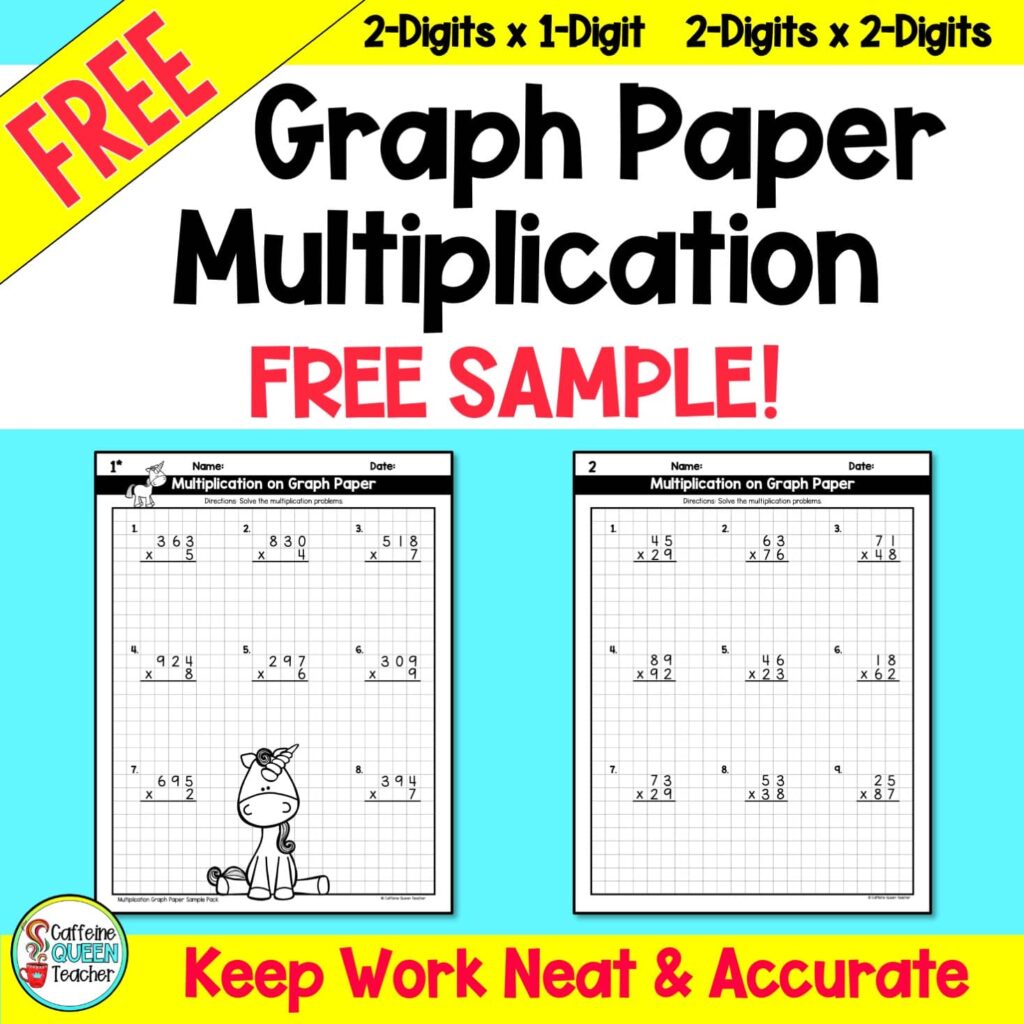
Using It with Students
When I introduced graph paper to my class, I always started by showing them on the Smartboard. I’d work a problem out loud so they could see exactly where each number went before they tried it themselves.
The one thing I always said first: one digit per box, every time. That was the rule. Once kids got that part down, the rest came pretty naturally.
For students who are still struggling, differentiate with these ideas:
• Add header labels at the top: O, T, H, Th, TTh… (ones, tens, hundreds, etc.)
• Color the columns. Use a highlighter on every other column to add even more visual help.
More Than Just Math
By the way, grid paper isn’t just for math. I’ve had students use it for spelling tests, short writing assignments, and art. Some of my students really loved it for spelling tests. One letter per box keeps words neatly spaced and easier to read.
For short writing assignments, it slows kids down just enough that their handwriting stays neater. It’s one of those things where the paper does half the work for you.
It’s a little different from regular paper, and kids notice that.
Sometimes different is just enough to make something feel more fun – don’t ask me why, I just know it’s true!
A Cheap and Easy Intervention
Graph paper is one of the best bargain tools out there for special ed classrooms, or any classroom.
It’s low-cost, easy to grab, and it’s a great fit for students with dyscalculia, dysgraphia, and dyslexia.
You’ll want to try out a few different sizes to see what works best for your students. You can print it for free right from the internet
Try these online printable graph papers: Style #1, Style #2, Style #3.
No Grid Paper? Try This Alternative:
If you don’t have any graph paper handy, try this trick:
Use a sheet of lined paper and turn it sideways! Each line becomes a column.
It works just as well! It’s a quick, easy hack for organizing columns and keeping work neat.

It doesn’t get any easier than that!
Questions Teachers Ask About Graph Paper
What size graph paper works best for elementary students?
It depends on the student. Bigger boxes, like ½ inch, are easier for younger kids or anyone who writes large. Smaller boxes work better for older students or multi-digit problems with lots of steps. I always kept a couple of sizes on hand and let students pick what felt right for them.
Can I use graph paper for standardized test prep?
Yes! I’d have students use it for any multi-step practice problems during test prep. I also made sure they had plenty of practice without it, but as a study and practice tool, it’s great. To be safe, double-check with your admin about using it on the actual test.
Do I need to buy special graph paper?
Nope. You can print it for free off the internet in whatever size you need. I’ve included some links above. You can also just keep a stack in a folder and grab it when you need it.
Ready-to-Use, Print-and-Go Sets
When you want print-and-go with built-in scaffolds, grab these grid paper sets for math in my Teachers Pay Teachers shop.
They’ll save you time and support students as they learn.

Check out this mega-pack with 11 different multiplication and division graph paper lessons to save you time:

FREE Multiplication Graph Paper Set!
I think you and your students will love using this multiplication FREE SAMPLE.
If you find it useful, visit my Teachers Pay Teachers shop to check more graph paper grid resources. I used them in my own classroom for years, and they work!
How About Color-By-Number with Grid Paper?
Your students are sure to love these NO-PREP, ready-to-print grid paper coloring sets. Students will have fun while practicing their skills – it’s a win-win!
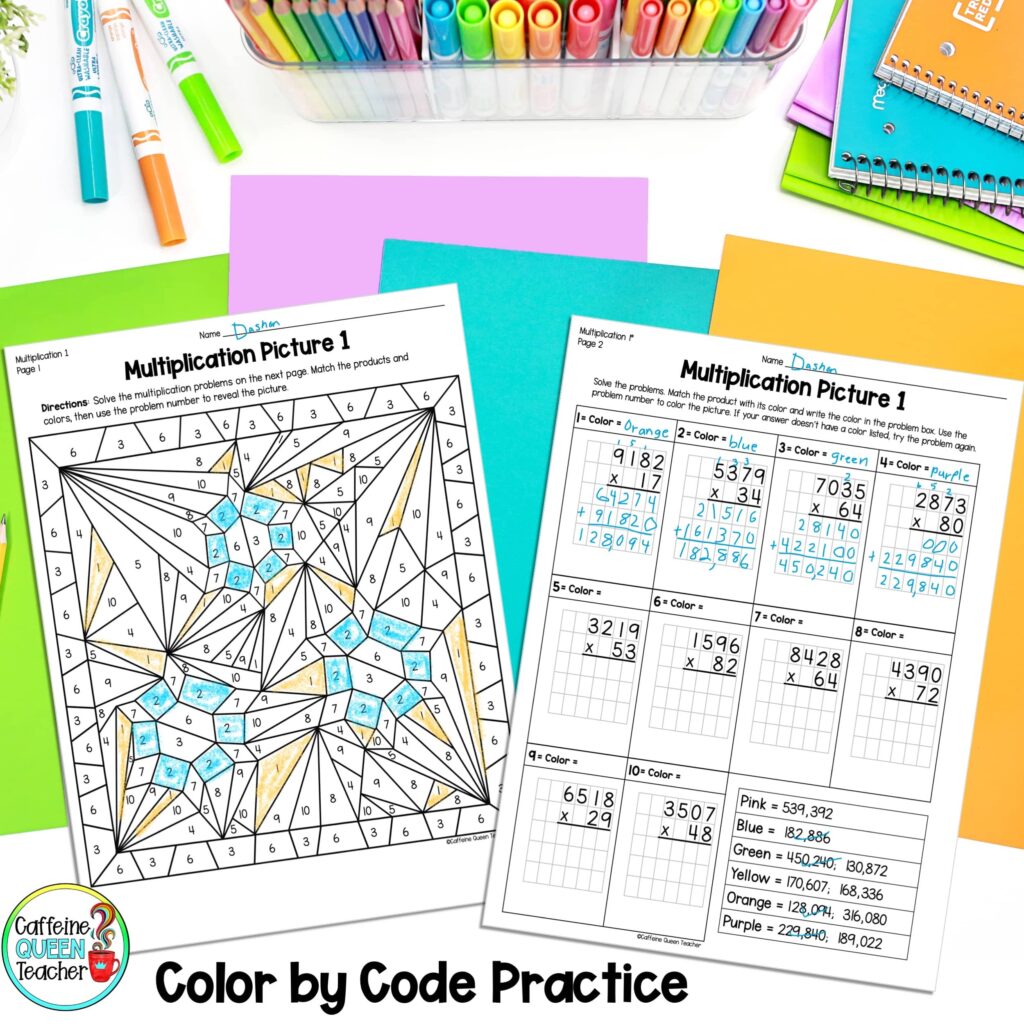
Want the big bundle of multiplication & division practice?
This ultimate bundle has everything you need to teach multiplication and long division to all levels of students! Learn more about this giant bundle!
More Articles about Long Division:
- Differentiated Long Division Worksheets for FREE – Grab these differentiated long division worksheets for FREE and dramatically boost students’ success and your teaching success!
- How to Teach Multi-Digit Multiplication and Long Division – This blog article will introduce you to differentiated multiplication and long division resources. Plus, you’ll learn exactly how I used them in my classroom.
More Differentiated Long Division Resources:
- Long Division Differentiated Worksheets and Organizers – Visit my TPT shop to see the complete set of organizers and worksheets included in this original set.
- All Division Resources – Click here to check out the division resources in my TPT shop.
- 2-Digit Divisors Long Division Differentiated Worksheets and Organizers – When you’re ready to move on to 2-digit divisors, you’ll appreciate this set that boosts long division learning with your students.
Articles about Multi-Digit Multiplication:
- 3 Ideas for Teaching Multi-Digit Multiplication – Here are 3 fast ideas for teaching multi-digit multiplication. These interventions are easy and quick for busy teachers.
- 2-Digit Multiplication Worksheets and Organizers – Differentiated Resources – Visit TPT to check out the complete set of organizers and worksheets included in this original set.
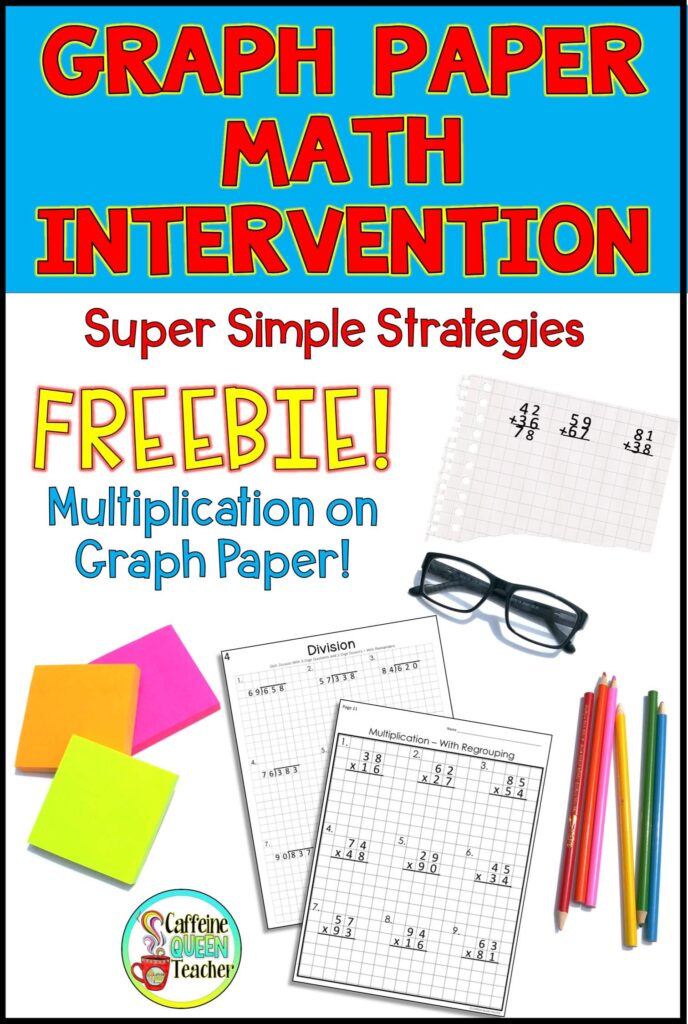
Thanks so much for your support – visit my TPT store and click the star to follow me!
About the Author
Written by Jules Rhee, MEd, and a 30-year teaching veteran; published 5/19/2018; latest update 6/8/2026.
Jules is the creator of Caffeine Queen Teacher (CQT) – Visual Math Organizers + Graph Paper Support. She’s a veteran teacher with over 30 years of classroom experience (SPED, upper elementary, and middle school) and a Master’s in Education (MEd). Jules shares practical, classroom-tested ideas and creates step-by-step resources that help students stay organized, confident, and successful – especially with multiplication and long division.
Read more about Jules here: About Page | Browse resources here: TpT Store
